

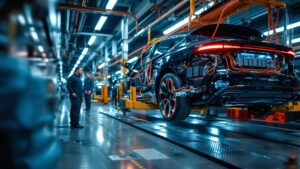
Electric Vehicle Platforms
Electric Vehicle Platforms are the hidden architecture that turns battery power into real-world performance—how an EV accelerates, charges, handles, and evolves over time. On Auto-Street, this hub dives into the “skateboard” foundations, modular frames, and software-defined systems that let automakers build sedans, SUVs, trucks, and vans from shared bones. You’ll see why wheelbase, motor layout, and pack placement reshape cabin space, crash structure, and center of gravity, and how structural

Battery Technologies
Battery Technologies are the heartbeat of modern mobility—the chemistry, engineering, and software that decide how far you go, how fast you charge, and how confidently an EV performs in heat, cold, and everything in between. On Auto-Street, this hub explores the full battery story: from today’s lithium-ion workhorses to next-wave ideas like solid-state designs, silicon-rich anodes, and safer electrolytes built to push energy density higher without sacrificing durability. We’ll break

Smart Mobility Networks
+ Road Basics 1. Smart mobility networks connect vehicles and infrastructure digitally. 2. Data sharing improves traffic flow and safety. 3. Vehicles act as networked data nodes. 4. Sensors monitor road, vehicle, and environmental conditions. 5. Communication happens in near real time. 6. Networks support both human-driven and autonomous cars. 7. Traffic signals adapt dynamically to demand. 8. Routing becomes predictive rather than reactive. 9. Connectivity scales from local streets

Software-Defined Vehicles
Software-defined vehicles are redefining what a car can be—transforming it from a fixed product into a continuously evolving digital platform. Instead of hardware alone determining features, performance, and behavior, software now sits at the center of the driving experience. From infotainment and driver assistance to power management, safety systems, and vehicle personalization, code shapes how modern vehicles think, respond, and improve over time. Over-the-air updates can unlock new capabilities long

Autonomous Driving Systems
Autonomous Driving Systems are pushing cars beyond assistance and into true machine perception—where sensors, software, and computing power work together to understand the road and make driving decisions in real time. Cameras, radar, and lidar can “see” lanes, vehicles, pedestrians, and hazards, while AI models interpret that flood of data to plan safe, smooth actions—braking, steering, merging, and navigating complex traffic. The goal isn’t just hands-free cruising; it’s a new
Hydrogen & Alternative Fuels
Hydrogen and alternative fuels are reshaping the idea of what powers a vehicle, pushing mobility beyond traditional gasoline and diesel toward cleaner, more flexible energy pathways. From hydrogen fuel cells that generate electricity on demand to biofuels, synthetic fuels, and renewable gas blends, these technologies explore how motion can be driven with lower emissions, faster refueling, and new infrastructure models. Each approach comes with its own chemistry, engineering challenges, and
Hybrid & Plug-In Systems
Hybrid and plug-in systems sit at the crossroads between traditional combustion and fully electric mobility, blending the strengths of both worlds into a single, adaptable driving experience. By combining internal combustion engines with electric motors and batteries, these vehicles optimize efficiency where it matters most—using electric power for low-speed driving and fuel power for longer journeys. Plug-in hybrids go a step further, allowing drivers to recharge from the grid and
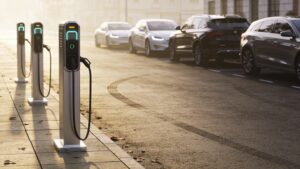
Charging Infrastructure
Charging infrastructure is the hidden highway system that makes electric driving feel effortless. It’s not just “a plug”—it’s a growing network of home chargers, workplace stations, curbside options, and high-power fast chargers built for road trips, errands, and everything in between. When it works well, charging disappears into the background: you park, connect, and come back to a ready-to-go vehicle. When it doesn’t, the details matter—connector types, station reliability, power
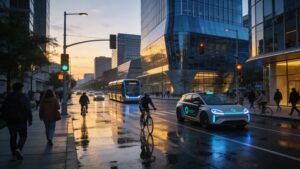
Urban Transportation Futures
Cities are moving faster than ever—and so are the ideas reshaping how we get around them. Urban Transportation Futures explores the technologies, designs, and policies redefining mobility in modern cities, from electric vehicles and autonomous systems to smart infrastructure and shared mobility networks. This space is where engineering meets everyday life, turning congestion, emissions, and aging roads into opportunities for cleaner, safer, and more connected movement. At Auto-Street, we dive