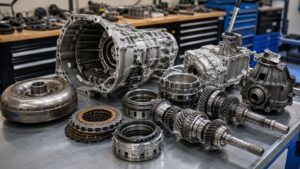
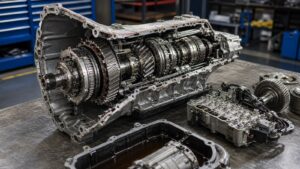
Transmissions are the unsung conductors of Auto-Street—quietly deciding how power becomes speed, how torque becomes traction, and how a vehicle feels in every moment between stoplight and open road. In Transmission Systems, you’ll explore the engineering that keeps engines and motors in their sweet spot, matching output to real-world demands with gears, clutches, hydraulics, and increasingly, software. From classic manuals and torque-converter automatics to lightning-fast dual-clutch units and efficiency-minded CVTs, this category breaks down what’s happening when you shift, why certain designs thrive in performance cars or work trucks, and how modern control logic transforms smoothness and response. You’ll learn how gear ratios shape acceleration, how differentials distribute force, and why heat management is a transmission’s greatest enemy. Whether you’re chasing crisp shifts, towing confidence, or track-ready consistency, these articles reveal the clever systems that make motion feel effortless—and prove that the best powertrain isn’t just powerful, it’s perfectly matched.
A: Manual for engagement; modern automatics for speed, consistency, and convenience.
A: Fast, efficient shifts—especially in performance driving.
A: Not inherently—longevity depends on design, cooling, and correct fluid service.
A: It can be normal shift logic under light throttle, or a sign of sensor/fluid issues.
A: Follow manufacturer guidance; some systems prefer drain-and-fill over aggressive flushing.
A: Low/old fluid, adaptation issues, solenoids/valve body wear, or mounts/driveline lash.
A: Often yes—cooling and fluid service are key to protecting the transmission.
A: It helps send torque to the wheel with grip, improving acceleration and control.
A: To keep engines in the power band while still cruising efficiently.
A: Keep it cool, use correct fluid, service on time, and avoid repeated high-heat abuse.