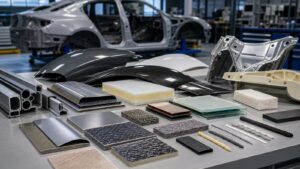
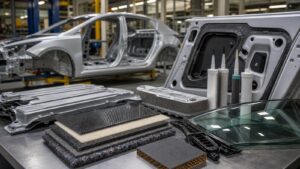
Welcome to Automotive Materials on Auto-Street—where cars are more than shapes and horsepower, and every panel, weld, and weave tells a story. The modern vehicle is a rolling chemistry set and structural puzzle: ultra-high-strength steels that protect you in a crash, aluminum that trims weight for efficiency, carbon fiber that chases stiffness, and smart polymers that silence noise while freeing designers to sculpt bold interiors. Add coatings that fight corrosion, adhesives that replace spot welds, and battery-grade materials engineered for heat and impact, and you’ve got a hidden world that determines how a vehicle feels, lasts, and performs. This category breaks down the materials that build today’s sedans, trucks, EVs, and supercars—why manufacturers choose them, how they’re formed and joined, and what trade-offs show up in cost, repairability, sustainability, and safety. If you’ve ever wondered why one car feels rock-solid, another sips fuel, and another turns heads, materials are the secret blueprint.
A: Different areas need different properties—crash strength, dent resistance, weight savings, or cost control.
A: A magnet won’t stick; also look for different dent behavior and repair notes from the manufacturer.
A: It can be very strong, but crash performance depends on design, layup, and energy absorption strategy.
A: Paint thickness, clear coat hardness, and front-end aero/stone impact exposure all play a role.
A: Seams, wheel arches, rocker panels, and underbody sections exposed to salt and moisture.
A: They’re engineered for low-speed impacts and pedestrian considerations, with absorbers behind them.
A: Sometimes—repairs can require OEM procedures, special tools, and controlled curing.
A: Battery enclosure structure, thermal materials, sealing, and high-strength crash rails for side impacts.
A: Often yes, but it must be balanced with stiffness, NVH, durability, and repair cost.
A: Wash regularly, fix chips early, protect paint, and keep drains/seams clear of debris.