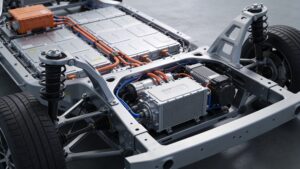
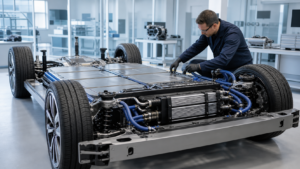
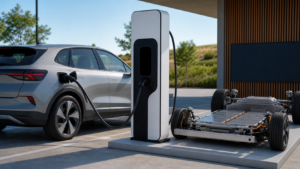
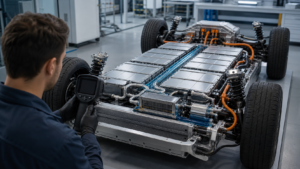
Electric Vehicle Platforms are the hidden architecture that turns battery power into real-world performance—how an EV accelerates, charges, handles, and evolves over time. On Auto-Street, this hub dives into the “skateboard” foundations, modular frames, and software-defined systems that let automakers build sedans, SUVs, trucks, and vans from shared bones. You’ll see why wheelbase, motor layout, and pack placement reshape cabin space, crash structure, and center of gravity, and how structural battery designs can boost stiffness while trimming mass. We’ll break down the hardware that matters—cells, modules, packs, inverters, e-axles, thermal loops—and the electrical decisions that define charging speed, from 400V workhorses to 800V sprinters. Beyond specs, we explore the platform playbook: scalability, manufacturing efficiency, over-the-air upgrades, and the tradeoffs that separate smooth, quiet cruisers from hard-launching torque monsters. Whether you’re shopping, wrenching, or just curious, these guides help you decode platforms before the badge ever matters most.
A: Look at voltage (400/800V), charging curve, thermal strategy, and motor layout (RWD/AWD), not just battery size.
A: Not always—speed depends on the platform’s charge curve, cooling, and the charger’s capability.
A: Platform tuning: suspension geometry, weight distribution, tire spec, and traction/regen calibration.
A: It can improve stiffness and reduce parts, but repairs may be more complex depending on the design.
A: Thermal management—heat pump efficiency, pack insulation, and preconditioning behavior.
A: Sometimes, but smart torque vectoring and efficient front motors can minimize losses when cruising.
A: To protect cells from heat and stress—platform control logic tapers power as state of charge rises.
A: It’s how the platform mixes regen and friction brakes; good blending feels smooth and predictable.
A: Often yes—platform software can refine efficiency maps, preconditioning, and charge curve management.
A: Use AC charging for daily needs, avoid frequent high-SOC parking, and fast charge mainly for trips.