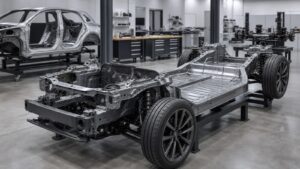
Chassis & Platform Design is where every great vehicle begins. Beneath the paint, performance, and personality lies a carefully engineered foundation that defines how a car drives, handles impact, carries weight, and adapts to future innovation. From traditional ladder frames to cutting-edge skateboard EV platforms, chassis design shapes everything from ride comfort and safety to efficiency and modularity. On Auto-Street, this section explores the unseen architecture that connects suspension, powertrain, body, and electronics into a unified system. You’ll dive into platform sharing strategies, unibody versus body-on-frame construction, lightweight materials, rigidity tuning, crash structures, and how modern platforms support everything from compact sedans to high-performance electric SUVs. Whether you’re curious about why some vehicles feel planted and confident while others feel loose, or how manufacturers stretch one platform across dozens of models, this collection breaks it all down with clarity and depth. Chassis & Platform Design isn’t just engineering—it’s the blueprint that determines how a vehicle behaves on every road, in every condition, for years to come.
A: Platform is the shared architecture (floor, hardpoints); chassis is the structure + running gear behavior.
A: Usually helps handling, but it must be paired with proper damping and NVH control.
A: Heavy towing/off-road often favors body-on-frame; daily comfort/efficiency often favors unibody.
A: Often damping is weak or mismatched; tires, alignment, and worn bushings can also contribute.
A: Tires, then alignment—those two unlock most of the chassis potential.
A: They can reduce travel and change geometry; matched dampers and alignment are key.
A: Misaligned camber/toe, altered roll center, or bushing deflection under load.
A: Bigger wheels often add weight and reduce sidewall compliance; tire choice matters more than diameter alone.
A: Tire construction, alignment (toe), and wide tread patterns can follow road ruts.
A: Noise/vibration/harshness shapes perceived quality—platform structure and mounts heavily influence it.