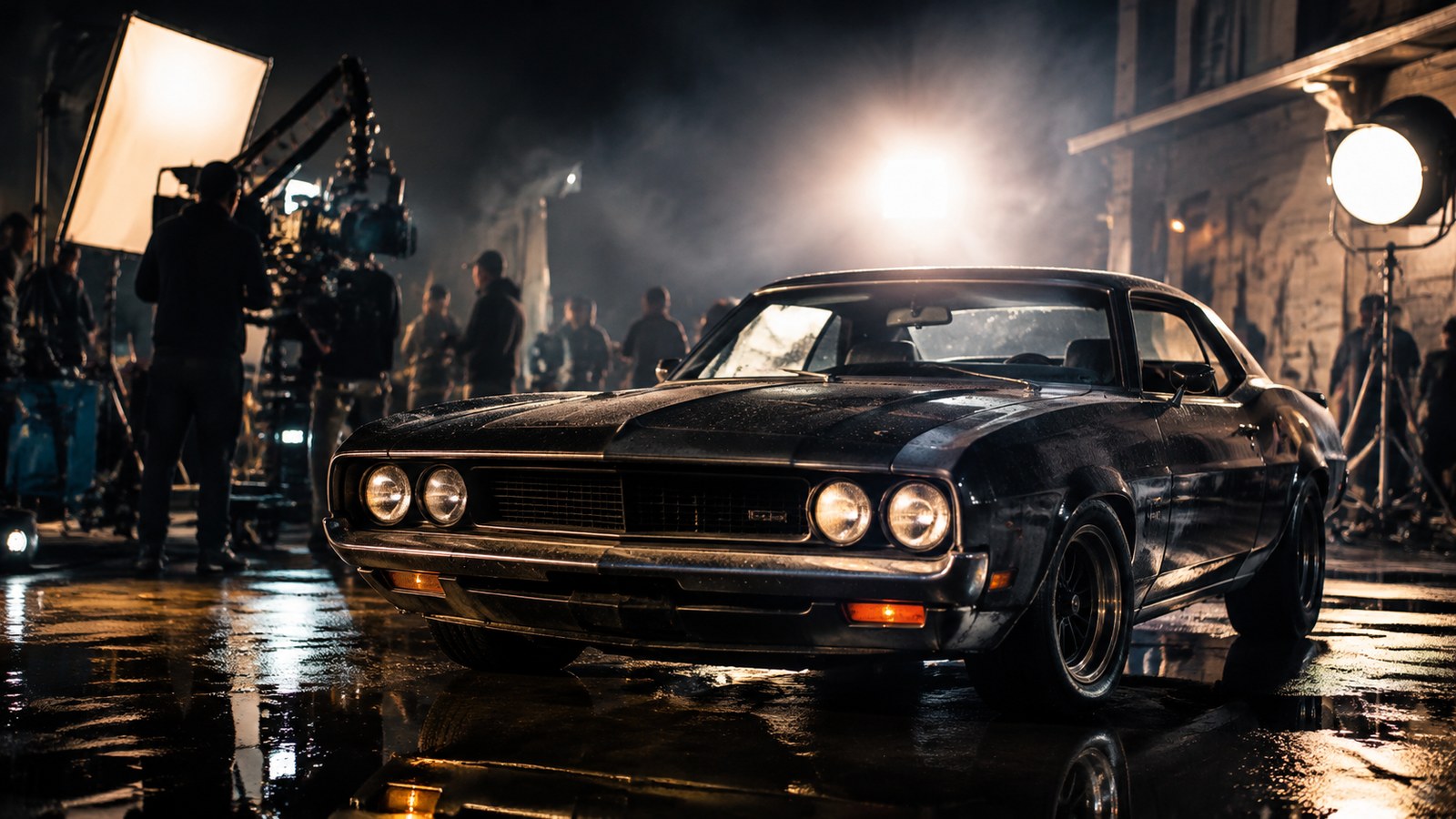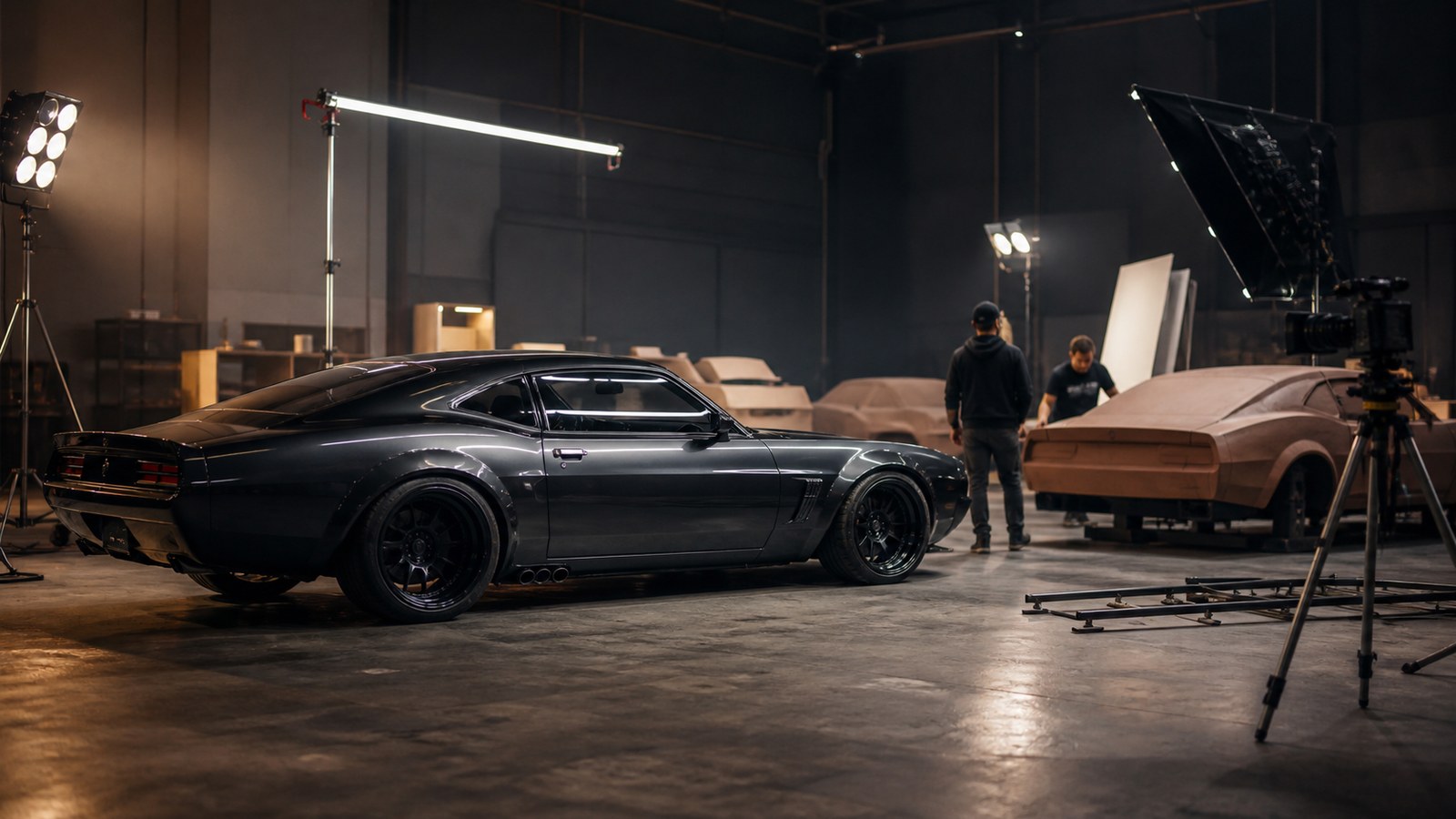
Film Cars Become Automotive Legends Through Story
Film cars become automotive legends when a vehicle carries more than transportation. The right car can reveal character, create a chase, sell a fantasy, define a world, or become the image people remember after the credits. The legend grows when the design, sound, scene, actor, and repeat visibility all reinforce each other.
Character Comes First
The best film cars feel cast, not parked. James Bond’s Aston Martin DB5 fits elegance and danger. The Bullitt Mustang fits quiet cool. The Mad Max Interceptor fits survival. The Back to the Future DeLorean fits invention. The Fast and Furious Supra and Dodge Charger fit found-family mythology, street-racing fantasy, and mechanical identity. These vehicles work because they extend the people and worlds around them.
A movie car becomes memorable when viewers understand the character faster because of the machine. A polished British grand tourer says something different from a battered police interceptor. A bright orange Toyota Supra says something different from a black Dodge Charger in a garage. A Cadillac ambulance covered in Ghostbusters equipment says something different from a sleek Batmobile. The car is not background dressing; it is visual storytelling with wheels.
The Scene Gives The Car Its Job
A car usually becomes legendary through a scene that gives it purpose. The Bullitt chase turns a Ford Mustang and Dodge Charger into sound, restraint, danger, and geography. The DeLorean needs speed to make time travel physical. The Aston Martin DB5 uses gadgets to make Bond’s elegance feel armed. Ecto-1 turns a Cadillac professional car into a comic rescue vehicle. The Jurassic Park Ford Explorer becomes frightening because the tour system fails when the people inside need it most.
Without the right scene, even a beautiful vehicle can vanish from memory. With the right scene, an ordinary platform can become famous for decades. The Pontiac Trans Am from Smokey and the Bandit, KITT from Knight Rider, Herbie the Volkswagen Beetle, the Mini Coopers from The Italian Job, and the Dodge Monaco Bluesmobile all show that movie-car fame is about timing, tone, motion, and repeat memory as much as horsepower.
Design Has To Be Recognizable
Legendary film cars are easy to recognize in silhouette, color, sound, or detail. The DeLorean has stainless panels and gullwing doors. The DB5 has elegant proportions and gadget mythology. The Batmobile changes by era but always reads as a weaponized extension of Batman. The General Lee Charger has orange paint, roof graphics, and jump imagery. The Jurassic Park Explorer has a tour-vehicle paint scheme that instantly recalls the park.
Recognizability also helps replicas, toys, posters, games, and fan builds keep the legend alive. A fan can spot Ecto-1 or the Bullitt Mustang before reading a sign. That instant recognition turns a screen prop into a cultural icon.
Sound And Motion Matter
Movie cars are remembered through movement. Engine noise, tire squeal, gear changes, sirens, crashes, and camera angles all shape the emotional memory. The Bullitt Mustang feels restrained until the chase opens up. The Fast and Furious Supra feels bright and mechanical. The Mad Max Interceptor feels brutal because it moves like a survival tool. The DeLorean feels theatrical because lights, smoke, sparks, doors, and acceleration all turn a simple speed threshold into a ritual.
This is why specifications alone cannot explain fame. A modern electric sedan may outrun many classic movie cars, but performance numbers do not replace scene meaning. The car needs to move in a way that makes viewers remember the film.
Hero Cars, Stunt Cars, And Replicas
Film productions often use more than one version of the same car. A hero car may be clean enough for close-ups. A stunt car may have reinforced suspension, safety cages, different engines, or hidden controls. Interior bucks may be used for cabin shots. Promotional vehicles may be built later for tours and premieres. Replicas may be built by fans or licensed builders years after release.
That distinction matters because a car can look correct without being screen-used. Provenance depends on paperwork, studio records, VINs, production photos, builder notes, restoration history, auction documentation, and chain of ownership. A tribute car can still be wonderful, but it is not the same as a documented screen-used vehicle.
Why Provenance Shapes Value
Movie-car value is built on proof. A documented screen-used Bullitt Mustang, Bond Aston Martin, Back to the Future DeLorean, or Fast and Furious car carries more historical weight than a later lookalike. Condition matters, but story and documentation often matter more. A rough but authentic car may be more important than a flawless replica because it physically touched the production.
Collectors look for evidence that connects the vehicle to filming. Was it used on camera? Was it a stunt shell? Was it a close-up hero car? Was it rebuilt after production? Were parts replaced? Did the studio sell it, store it, or discard it? Each answer changes the car’s importance and value.
Replicas Keep The Legend Public
Most fans will never stand next to the original screen-used vehicle. Replicas and tribute cars keep the memory available at local shows, parades, charity events, museums, conventions, and cars and coffee meets. A careful Ecto-1, KITT, Jurassic Park Explorer, Batmobile, General Lee, DeLorean time machine, Herbie, or Fast and Furious Supra can create a crowd because people recognize the feeling before they inspect the details.
Honesty is the key. A tribute car does not need fake screen history to matter. It matters because it shows how deeply the original design entered popular culture. Good replicas also need safe brakes, tires, lights, wiring, visibility, and secure props if they are driven on public roads.
Automakers Benefit From Screen Memory
Film cars can reshape how the public remembers an automaker. The DB5 helps Aston Martin decades after its first Bond appearance. The Mustang still benefits from Bullitt. The Trans Am gained pop-culture energy from Smokey and the Bandit and Knight Rider. The Toyota Supra’s enthusiast image still carries Fast and Furious influence. The DeLorean became more famous from film than from its original sales record.
This cultural lift can outlive advertising campaigns. A film gives a vehicle a story people retell voluntarily. That kind of memory is difficult to buy because it depends on whether viewers believe the car belongs in the scene.
Different Genres Build Different Legends
Action films often make cars legendary through danger, speed, and pursuit. Science fiction uses cars to make imaginary technology feel physical. Comedy can turn a strange vehicle into a running joke. Horror and dystopian films use cars as survival machines. Crime films use cars to signal taste, menace, or escape. Family films can give cars personality.
That range explains why the DB5, DeLorean, Ecto-1, Herbie, Batmobile, Interceptor, Charger, Supra, Jurassic Park Explorer, and Bluesmobile can all be iconic without solving the same storytelling problem. Each car became the right object for its world.
What Makes A Film Car Last
A lasting film car has a recognizable look, a memorable scene, emotional fit, repeat exposure, and a story fans can share. It also helps when the vehicle is reproducible enough for toys, games, posters, replicas, and later appearances. Some cars stay famous because sequels keep bringing them back. Others stay famous because one scene was strong enough to keep the image alive.
The strongest film cars become shorthand. Say DeLorean and many people think time machine. Say DB5 and they think Bond. Say Ecto-1 and they hear a siren. Say Bullitt Mustang and they imagine San Francisco hills. That shorthand is the point where a car becomes more than a prop.
Mechanical Reality Shapes The Final Image
Behind the famous image, film cars are working tools. They need to start on command, survive repeated takes, fit camera rigs, carry actors safely, and sometimes perform the same maneuver again and again. A hero car can be polished for close-ups, but a stunt car may need hidden reinforcement, simplified interiors, roll protection, different brakes, altered suspension, or drivetrain changes that viewers never see.
This practical side explains why movie cars can differ from the vehicles they appear to be. A car may wear one badge on screen while using modified mechanical parts underneath. A vehicle may have stunt duplicates with different engines, automatic transmissions, or safety equipment so drivers can hit marks reliably. The audience remembers one machine, but the production team often manages a small fleet of specialized versions.
Chase Cars Need Geography
Many legendary film cars are remembered because the location made the car feel alive. Bullitt needed San Francisco’s hills. The Italian Job needed tight city movement. Mad Max needed empty roads and a hostile landscape. Jurassic Park needed rain, mud, fences, and the feeling of being trapped. The Fast and Furious films used garages, industrial streets, desert roads, and night scenes to make car culture feel like a world with its own rules.
That setting changes the vehicle’s meaning. A Mustang on a flat studio backlot is just a Mustang. A Mustang diving through San Francisco traffic becomes a different object. A DeLorean parked in a driveway is unusual. A DeLorean leaving fire trails becomes myth. Legendary film cars need places that let them perform their identity.
Color, Graphics, And Small Details Carry Memory
Color often does as much work as horsepower. The green Bullitt Mustang, silver DeLorean, orange General Lee, white Ecto-1, black Charger, yellow Bumblebee Camaro, red Ferrari from Ferris Bueller’s Day Off, and Jurassic Park tour graphics all show how visual memory attaches to simple signals. Fans can recognize a movie car from a stripe, plate, light bar, wheel, or paint scheme.
Small details matter because they make the vehicle reproducible in memory. A license plate, roof sign, siren, hood scoop, grille, stripe, gadget panel, or wheel design gives fans something to point to. Those details also make replicas possible. When a car has enough recognizable cues, it can travel from film to toy shelves, posters, video games, and local car shows without losing its identity.
Film Cars Influence Real Car Culture
Movie cars do not stay on screen. They change what people build, collect, and notice. The Fast and Furious franchise helped make the Toyota Supra, Mitsubishi Eclipse, Mazda RX-7, Nissan Skyline, Dodge Charger, and Honda tuner culture more visible to broad audiences. Bond kept Aston Martin tied to elegance and gadgets. Bullitt kept the Mustang linked to understated performance. Mad Max gave certain rough, survival-style builds a permanent visual reference.
That influence can be playful or serious. Some owners build exact replicas. Others borrow a color, wheel style, stance, stripe, or mood. Automakers sometimes respond with special editions or marketing nods because the screen memory still has commercial power. A film car becomes automotive legend when it changes what people want to own in real life.
Authenticity And Restoration Can Be Difficult
Restoring a film car is not always the same as restoring a normal collector car. The correct condition may be the way it appeared on screen, the way it left the studio, or the way it survived after years of storage and changes. Stunt damage, replacement panels, mismatched parts, quick production repairs, and later promotional modifications can all be part of the story.
Restorers have to decide what history they are preserving. A perfect repaint may erase production scars. Leaving damage may preserve authenticity but make display harder. Replacing unsafe mechanical parts may be necessary if the vehicle will run at events. The best restorations document those choices so future viewers understand what is original, what was repaired, and what was recreated.
Why Some Film Cars Fade
Not every screen car becomes legendary. Some are too generic, appear too briefly, lack a memorable scene, or belong to films that do not stay culturally active. Others are overshadowed by actors, dialogue, or effects. A car can be expensive or rare and still fail to become iconic if the audience never forms an emotional connection to it.
Longevity depends on repeat discovery. Television reruns, streaming, sequels, toys, games, memes, museums, and anniversary events keep certain cars alive. Without that repeated exposure, even a striking movie car can become a footnote. The legends endure because each generation gets another chance to meet them.