The Hidden Architecture Beneath Every Car
Every modern car begins with structure. Before there is paint, leather, infotainment, horsepower, or polished trim, there is a framework designed to carry weight, resist stress, absorb impact, and define the vehicle’s entire personality. This hidden framework is the structural DNA of the automobile. It determines how a car feels over rough pavement, how confidently it turns, how it protects passengers in a crash, and how efficiently it uses fuel or battery power. Most drivers see the finished vehicle, but engineers see a living system of load paths, materials, joints, reinforcements, and carefully calculated weak points. A modern car is not simply a box on wheels. It is a rolling structure designed to survive vibration, twisting forces, weather, heat, cold, impacts, and years of daily use. Understanding how vehicles are built from the ground up reveals why some cars feel solid and refined while others feel loose, noisy, or fragile.
A: It is the combination of platform, frame, body structure, materials, safety systems, suspension layout, and packaging choices that define how a vehicle is built and behaves.
A: It means the body and frame are integrated into one structure instead of using a separate body-on-frame layout.
A: Shared platforms reduce development cost, speed up production, and allow multiple models to use similar engineering foundations.
A: Not always. Safety depends on crash structure, restraint systems, materials, vehicle compatibility, and how impact energy is managed.
A: A stiffer chassis helps the suspension work accurately, improves steering response, and reduces unwanted flex and vibration.
A: They are engineered areas designed to deform during a crash so impact energy is absorbed before it reaches occupants.
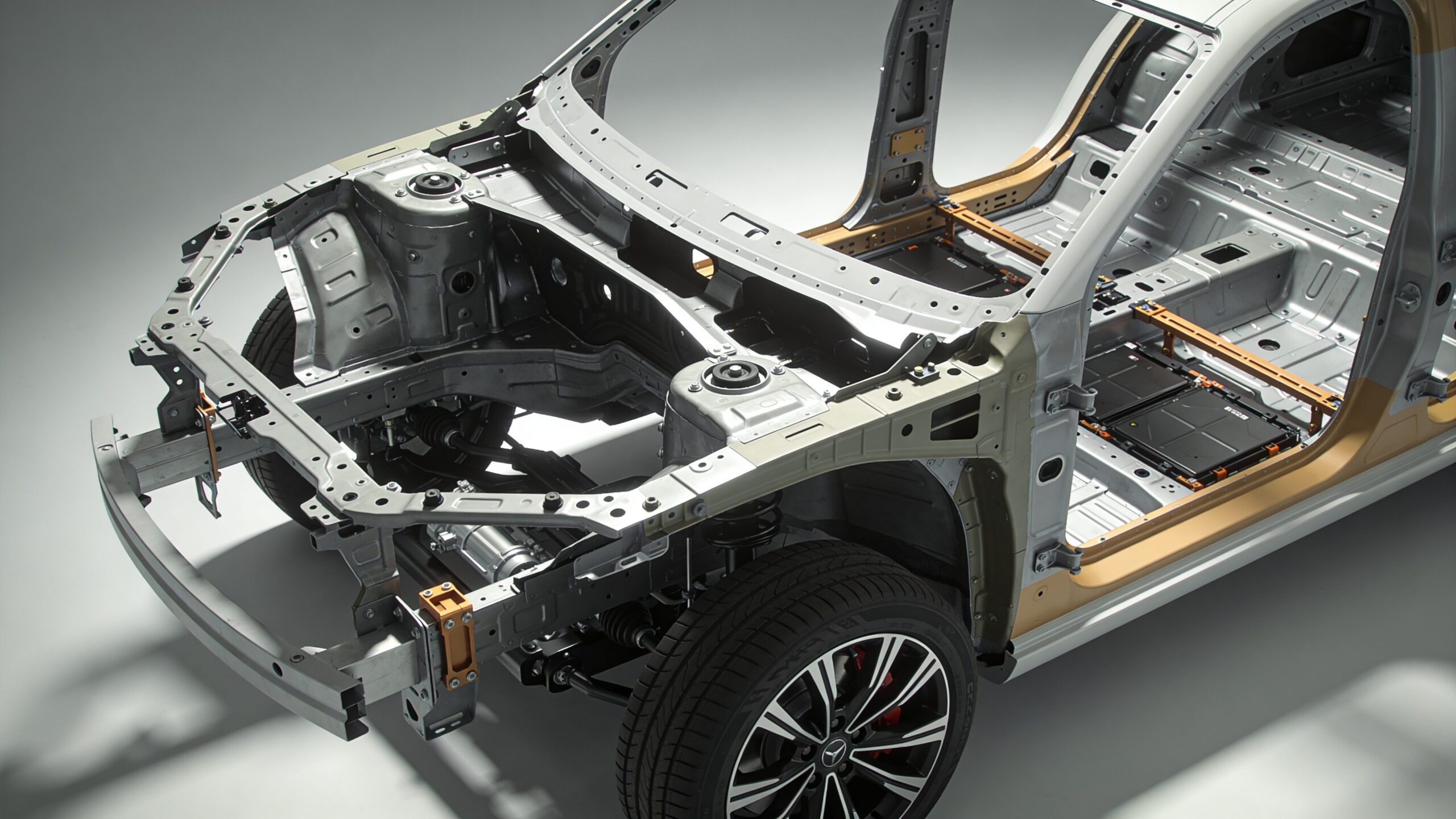
A: Many EVs place a large battery pack in the floor, which can increase rigidity and lower the center of gravity.
A: A subframe is a structural module that supports major systems such as the engine, suspension, steering, or electric drive unit.
A: Yes, but only when repaired with correct procedures, measuring equipment, materials, and manufacturer-approved methods.
A: Look for uneven panel gaps, repaired welds, corrosion, tire wear, alignment issues, paint differences, and signs of prior structural damage.
What “Structural DNA” Means in Automotive Design
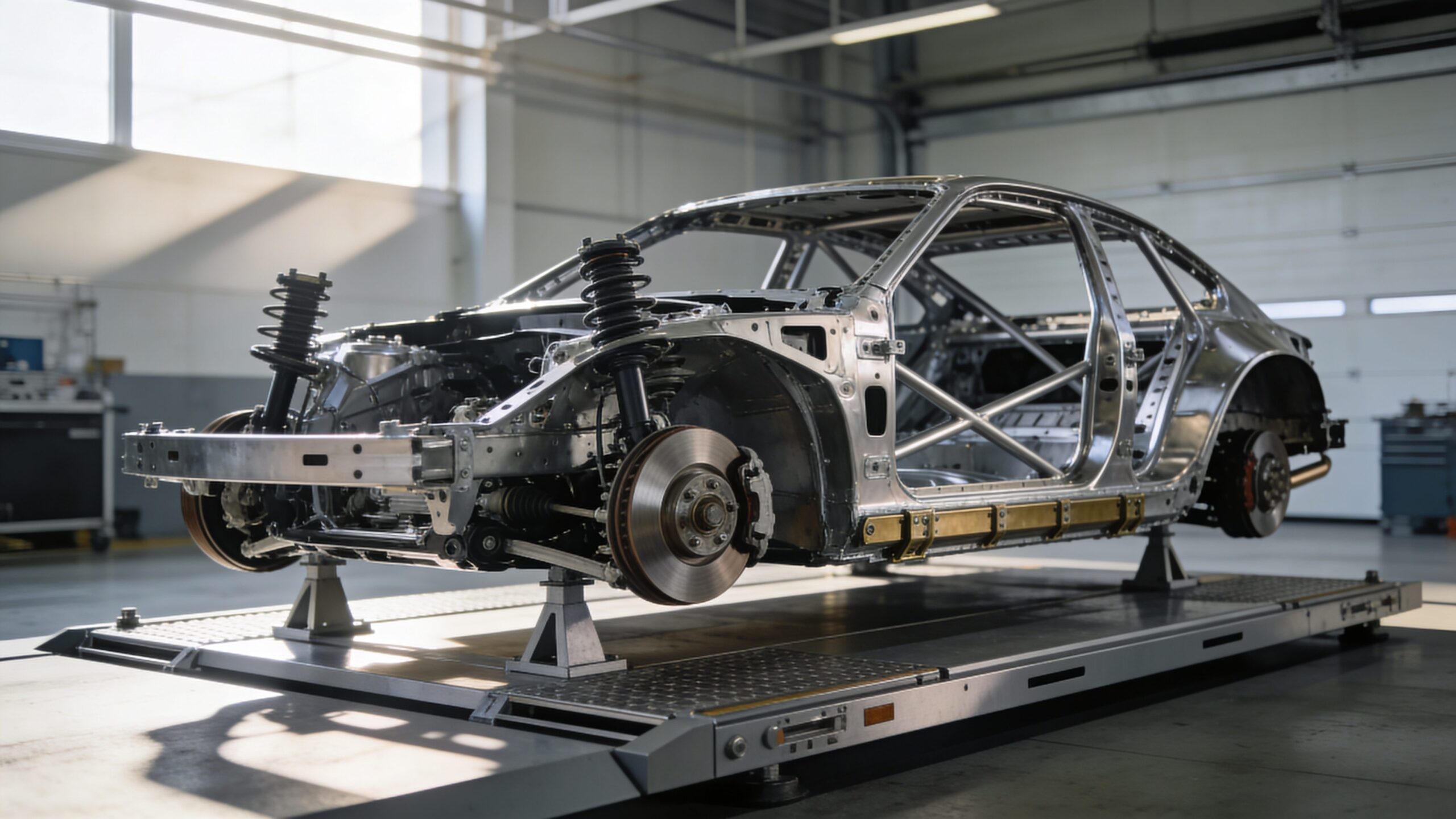
The structural DNA of a car refers to the core engineering decisions that shape the vehicle before styling or features are added. It includes the chassis, frame, platform, body structure, suspension mounting points, crash zones, floor pan, roof pillars, and the materials used throughout the vehicle. These elements work together like the bones, muscles, and protective shell of the automobile. They are not separate pieces thrown together at the end; they are part of one deeply integrated design.
This DNA affects nearly everything about the driving experience. A rigid structure allows the suspension to work more precisely. A lighter structure improves acceleration, braking, and efficiency. A well-designed safety cage protects passengers while crumple zones manage crash energy. Even cabin quietness depends on the structure, because vibrations and road noise travel through the body. The better the foundation, the better the entire vehicle can perform.
The Chassis: The Foundation of the Automobile
The chassis is often described as the backbone of the car, and for good reason. It supports the engine, drivetrain, suspension, steering system, brakes, body, and passengers. In older vehicles and many trucks, the chassis was a separate frame that carried the body. In many modern passenger cars, the chassis and body are integrated into a unibody structure. This means the entire shell of the vehicle contributes to strength. A strong chassis does more than hold parts together. It manages the enormous forces created by acceleration, braking, cornering, and impacts. When a car turns sharply, the structure resists twisting. When it hits a pothole, the chassis distributes the shock. When it crashes, the structure directs energy away from the cabin. The chassis is the stage on which every mechanical system performs, and its quality can make the difference between a car that feels precise and one that feels unsettled.
Body-on-Frame vs Unibody Construction
Two major construction methods define much of automotive history: body-on-frame and unibody. Body-on-frame vehicles use a separate ladder-like frame with the body mounted on top. This design is strong, durable, and excellent for towing, hauling, and off-road use. That is why many pickup trucks, large SUVs, and rugged utility vehicles still rely on it. The frame handles heavy loads, while the body can be designed around passenger comfort and cargo needs.
Unibody construction combines the frame and body into one integrated structure. This approach is common in sedans, hatchbacks, crossovers, and many modern SUVs. Because the body itself carries structural loads, unibody vehicles are usually lighter, more efficient, and more responsive on the road. They also allow engineers to design sophisticated crumple zones and safety cages. The choice between body-on-frame and unibody is not about one being universally better; it is about matching structure to purpose.
The Platform: A Car’s Engineering Blueprint
Modern automakers often build multiple vehicles from a shared platform. A platform is the underlying engineering blueprint that may include the floor structure, suspension layout, crash architecture, wheelbase flexibility, drivetrain placement, and electronic systems. This allows manufacturers to build different models with shared structural DNA. A sedan, crossover, and compact SUV may look very different but still share key engineering foundations. Platform sharing helps automakers reduce cost, improve quality, and speed up development. It also allows proven safety and performance engineering to be used across multiple vehicles. However, a platform must be flexible enough to support different body styles, powertrains, and markets. The best modern platforms are modular, meaning engineers can adjust length, width, battery placement, suspension design, and crash structures while keeping the core architecture consistent.
Materials That Give Cars Their Strength
The materials inside a modern vehicle are carefully chosen for strength, weight, cost, repairability, and safety. Steel remains the most common structural material because it is strong, affordable, and well understood. Modern vehicles often use high-strength and ultra-high-strength steel in critical areas such as pillars, roof rails, rocker panels, and crash structures. These steels allow cars to be safer without becoming excessively heavy.
Aluminum is used when weight reduction is a priority. It is lighter than steel and resistant to corrosion, making it valuable for hoods, doors, suspension components, and sometimes full body structures. Carbon fiber and advanced composites appear in high-performance and luxury vehicles where weight savings are worth the cost. Increasingly, modern cars use mixed-material construction, combining steel, aluminum, composites, adhesives, and advanced fasteners to create structures that are both strong and efficient.
How Cars Are Built From the Ground Up
A modern car begins as a collection of engineered components that gradually become a complete structure. The floor pan, frame rails, crossmembers, pillars, roof supports, and body panels are stamped, formed, welded, bonded, or fastened together. In a factory, robotic systems assemble these parts with remarkable precision. The early unfinished structure is often called the body-in-white, a bare metal shell before paint, interior, drivetrain, and final assembly. This stage is where the vehicle’s true shape and strength emerge. Engineers must ensure that every weld, joint, panel, and reinforcement supports the larger design. Small changes in geometry can affect crash performance, cabin space, noise, vibration, and handling. Once the body structure is complete, it moves through painting, drivetrain installation, suspension assembly, wiring, interior installation, and quality testing. By the time the car reaches the showroom, its structural story is mostly hidden beneath finished surfaces.
Crash Safety and Controlled Deformation
One of the most impressive features of modern car structure is controlled deformation. In a crash, certain areas of the vehicle are designed to crush in a predictable way. These crumple zones absorb impact energy before it reaches the passenger compartment. The front and rear of the vehicle may deform dramatically, but the cabin must remain as intact as possible. This balance between controlled weakness and protected strength is central to automotive safety.
The passenger safety cell is reinforced with strong pillars, roof rails, door beams, rocker panels, and crossmembers. Engineers use computer simulations and physical crash tests to refine how energy moves through the structure. The goal is not to make every part of the car rigid. A car that is too stiff in the wrong places can transfer dangerous forces to occupants. The safest structures are carefully tuned to bend, fold, resist, and redirect energy at exactly the right moments.
Rigidity, Handling, and Driving Feel
Structural rigidity plays a major role in how a vehicle handles. When a car turns, brakes, or accelerates, its body is exposed to twisting and bending forces. If the structure flexes too much, the suspension cannot maintain precise control over the wheels. This can make the vehicle feel vague, noisy, or unstable. A rigid structure gives the suspension a stable foundation, improving steering response and driver confidence. Performance cars place special emphasis on torsional rigidity, which measures resistance to twisting. However, rigidity matters in everyday vehicles too. A solid structure can improve ride comfort, reduce squeaks and rattles, and make the cabin feel more refined. It also helps engineers tune suspension more accurately because the body is not constantly flexing under load. This is why two vehicles with similar horsepower can feel completely different on the road.
Suspension Mounting Points and Vehicle Balance
The suspension does not work in isolation. It attaches to the vehicle’s structure through carefully engineered mounting points. These points must be strong enough to handle constant impacts and forces while maintaining precise alignment. If suspension geometry changes unintentionally because of weak or flexible mounting areas, handling and tire wear can suffer. That is why the structural foundation around suspension components is so important.
Vehicle balance is also shaped by the structure. The placement of the engine, transmission, battery, fuel tank, passengers, and cargo all affects weight distribution. A well-designed structure helps keep weight low and balanced, improving stability and control. In electric vehicles, large battery packs mounted under the floor can lower the center of gravity, giving the vehicle a planted feel. The architecture beneath the cabin quietly influences every movement the driver feels.
Noise, Vibration, and Harshness
The structure of a car also affects how quiet and comfortable it feels. Engineers often refer to noise, vibration, and harshness as NVH. Road impacts, engine vibration, wind noise, and tire noise all travel through the structure. If the body is poorly designed, these vibrations can enter the cabin and make the vehicle feel cheap or tiring. A strong, well-isolated structure helps create a calmer driving experience. Modern automakers use advanced computer modeling to identify vibration paths before a car is built. They may add reinforcements, sound insulation, adhesives, bushings, and tuned mounting points to control unwanted movement. Luxury vehicles often feel refined not just because of soft seats or thick glass, but because their underlying structures are carefully engineered to reduce noise and vibration. Comfort begins deep inside the architecture.
Electric Vehicles and the Skateboard Revolution
Electric vehicles have changed how engineers think about automotive structure. Many EVs use a skateboard-style platform, with the battery pack mounted flat beneath the passenger compartment. This layout creates a low center of gravity, opens up cabin space, and allows flexible body designs. The battery pack can also contribute to structural stiffness when properly integrated into the platform.
However, EV structures must solve unique challenges. The battery must be protected from impacts, water, heat, and deformation. Engineers design reinforced enclosures, side-impact protection, and underbody shields to protect the pack. Because EVs can be heavy, lightweight materials and efficient structure are even more important. The electric era is not just changing powertrains; it is rewriting the structural DNA of the automobile.
Aerodynamics and Structural Shape
The structure of a car also influences aerodynamics. The height of the hood, slope of the windshield, roofline, underbody layout, and rear shape all affect how air moves around the vehicle. While styling teams create the visual personality, engineers must ensure the structure supports aerodynamic efficiency. A lower, smoother, stronger body can reduce drag and improve fuel economy or electric range. The underbody has become especially important in modern vehicles. Flat floors, carefully shaped panels, and controlled airflow can make a major difference at highway speeds. Electric vehicles often benefit from smoother underbody designs because they do not need traditional exhaust systems. The structure and aerodynamics must work together, proving that the shape of a car is not only about beauty but also efficiency.
Manufacturing Precision and Modern Assembly
Modern vehicle manufacturing depends on extraordinary precision. Robots weld, bond, rivet, and assemble structural components with repeatable accuracy. Laser measurement systems check alignment, while quality-control processes inspect gaps, joints, and dimensions. A small error in the structure can affect door fit, crash performance, suspension alignment, or water sealing. That is why body construction is one of the most carefully controlled parts of automobile manufacturing.
Adhesive bonding has become increasingly important. Structural adhesives can increase rigidity, reduce vibration, and help join different materials. Rivets, screws, welds, and bonding methods are often combined depending on the materials being used. As vehicles become more complex, factories must adapt to mixed-material construction, EV platforms, and tighter safety standards. The modern assembly line is as much a laboratory of precision as it is a place of production.
Durability, Rust, and Long-Term Strength
A vehicle’s structure must survive years of use in challenging conditions. Heat, cold, rain, salt, potholes, towing, vibration, and minor impacts all test the body over time. Rust is one of the greatest enemies of structural durability, especially in areas where road salt is common. Once corrosion attacks critical structural areas, safety and repair costs can become serious concerns. Automakers protect modern structures with coatings, sealants, drainage paths, galvanized steel, aluminum parts, and underbody protection. Still, owners play a role in preserving structural health. Washing the underbody, repairing paint damage, inspecting suspension mounts, and addressing rust early can help extend a vehicle’s life. A car’s structural DNA may be engineered in the factory, but its long-term strength depends on care and environment.
Why Modern Cars Feel So Different From Older Cars
Older cars often feel more mechanical, more flexible, and less isolated than modern vehicles. Their structures were usually simpler, with fewer computer-modeled reinforcements and less emphasis on crash energy management. Modern cars are typically stiffer, quieter, and safer because engineers now design the entire vehicle as an integrated system. Materials, load paths, electronics, crash safety, and manufacturing precision all work together.
This does not mean older vehicles lack character. Many classic cars have a raw, direct charm that modern vehicles sometimes smooth away. But from a structural standpoint, today’s automobiles are far more advanced. They are designed to meet stricter safety expectations, support complex electronics, reduce emissions, improve efficiency, and deliver refined comfort. The hidden structure beneath the surface is one of the biggest reasons cars have evolved so dramatically.
The Future of Vehicle Structure
The next generation of vehicle structure will be shaped by electrification, automation, sustainability, and advanced materials. Automakers are exploring lighter steels, recycled aluminum, carbon composites, structural battery packs, mega-castings, and modular platforms. Some future vehicles may use fewer parts, larger cast sections, and smarter manufacturing methods to reduce weight and complexity. The goal is to build stronger, lighter, safer cars with fewer resources. Autonomous vehicles may also change structural priorities. If cabins become more flexible, with seats that rotate or interiors designed like lounges, engineers will need new ways to protect occupants. Smart sensors may monitor structural health, while advanced materials could respond differently under stress. The structural DNA of cars will continue evolving, but its purpose will remain the same: protect people, support performance, and give every vehicle its foundation.
The Ground-Up Genius of Modern Automobiles
The modern car is one of the most complex products most people use every day. Beneath its familiar shape is a world of engineering decisions that determine how it drives, protects, lasts, and performs. The structural DNA of a vehicle is not only about metal and materials. It is about purpose, precision, balance, safety, and innovation.
From chassis to platform, from crumple zones to suspension mounts, from factory robots to future EV architectures, every layer contributes to the finished automobile. The next time a car glides quietly down the highway or holds steady through a corner, its hidden structure is doing the work. That is the beauty of automotive engineering: the parts you rarely see are often the parts that matter most.