Performance Builds Start With Purpose, Not Horsepower
Performance builds improve acceleration, braking, cornering, towing confidence, off-road control, track durability, or driver engagement. The correct parts depend on the goal. A drag car, autocross car, road-course car, street car, tow rig, EV track car, and trail vehicle need different answers. Power is only useful when the rest of the vehicle can control it.
Performance Begins With A Baseline
A good performance build starts by making the vehicle healthy before adding speed. Tires, brakes, fluids, cooling, suspension, alignment, mounts, battery health, and warning lights all matter before power upgrades. A car with old tires, tired shocks, weak brakes, or unknown maintenance will not become trustworthy because it gained horsepower. It will simply reach its limits faster.
The baseline also gives the owner a way to measure progress. Acceleration, braking distance, lap consistency, towing temperatures, tire wear, ride quality, and driver confidence can all be tracked before and after modifications. Without that starting point, the build becomes a stack of parts instead of a clear improvement.
Define The Type Of Performance
Performance can mean many things. A drag build wants launch traction, driveline strength, cooling, and repeatable straight-line power. An autocross car wants response, grip, balance, and quick transitions. A road-course car needs brakes, cooling, tire management, and reliability over repeated laps. A street performance build needs comfort, inspection compliance, wet-road behavior, and easy service. A tow rig needs torque control, cooling, brakes, tire load rating, and stability.
Choosing the goal prevents contradictory parts. A stiff track suspension can make a daily driver unpleasant. A large turbo can make a street car laggy. Oversized tires can hurt braking and gearing. A build becomes more successful when every part answers the same driving question.
Tires Are The First Performance Part
Tires decide how much acceleration, braking, and cornering the vehicle can actually use. Compound, tread pattern, sidewall stiffness, width, diameter, load rating, and temperature range all matter. A powerful car on poor tires can feel dramatic but slow and inconsistent. A modest car on excellent tires can become sharper, safer, and more predictable.
Street tires, summer performance tires, all-season tires, all-weather tires, drag radials, track tires, all-terrain tires, and winter tires serve different jobs. Matching the tire to the climate and use case is more important than chasing width alone. Wider tires can add grip, but they can also add weight, tramlining, hydroplaning risk, cost, and clearance problems if the setup is wrong.
Brakes Need Heat Capacity
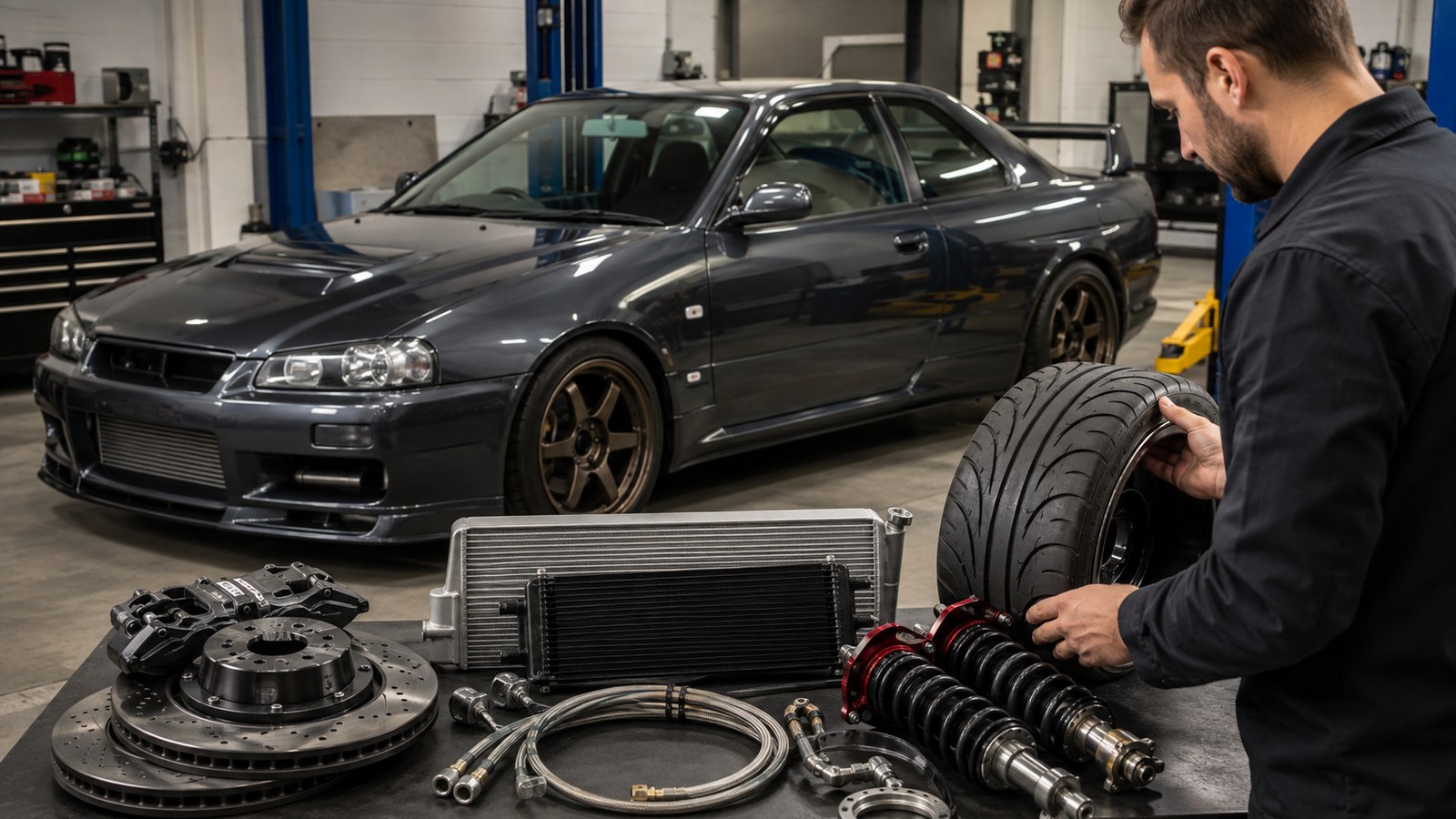
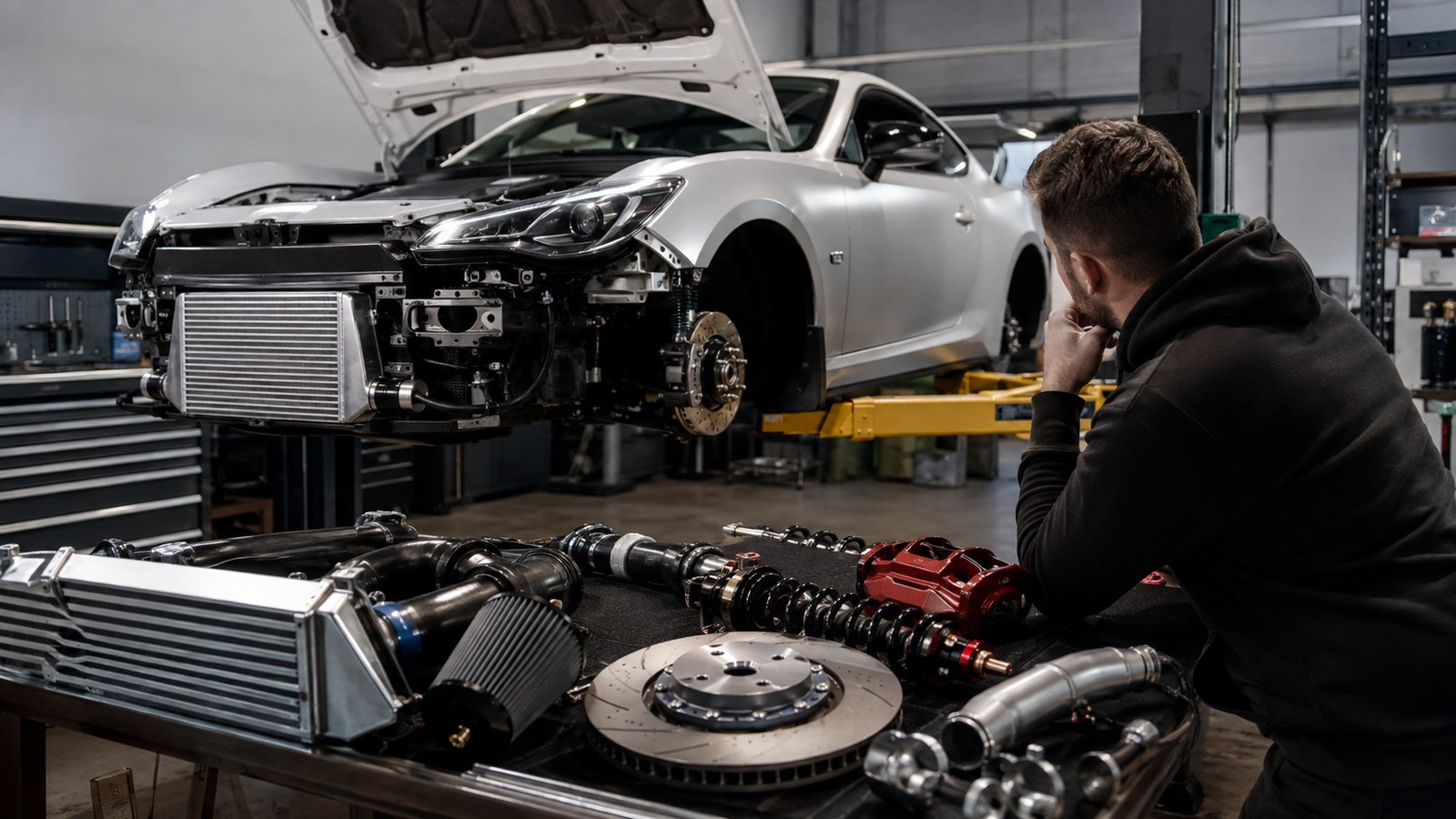
Performance driving turns braking into heat management. Pads, rotors, fluid, lines, calipers, ducts, tires, and driver technique all shape stopping consistency. A bigger brake kit is not always the first answer. Many street and occasional track cars benefit from high-quality pads, fresh high-temperature fluid, proper bedding, and tires that can use the braking force.
Brake fade, vibration, long pedal travel, fluid boiling, uneven pad deposits, and cracked rotors are signs the system is beyond its comfort zone. For towing and mountain driving, brake control also includes downshifting, trailer brakes, load distribution, and leaving space. A performance build is only as good as its ability to slow down repeatedly.
Suspension Is About Control, Not Just Height
Suspension changes need to improve tire contact. Springs, shocks, coilovers, sway bars, bushings, control arms, camber plates, ride height, corner balance, and alignment all affect how the tire meets the road. Lower does not automatically mean better. Too little travel can make the car skip over bumps, lose grip, or wear tires quickly. Too much stiffness can reduce confidence on real roads.
For trucks and off-road vehicles, lift height is only one part of control. Shock quality, spring rate, articulation, bump stops, steering geometry, driveline angles, tire clearance, and payload matter more than appearance. A good suspension build feels composed in the environment it was built for.
Power Requires Supporting Systems
Intakes, exhausts, turbochargers, superchargers, camshafts, fuel systems, intercoolers, software tunes, and electric-motor control changes can increase output. More power also increases heat and stress. Cooling, fuel delivery, transmission capacity, clutch strength, axles, engine mounts, tires, and brakes may need attention before the extra output becomes useful.
Reliable power is usually staged. Start with maintenance, monitoring, and mild changes. Watch temperatures, knock behavior, fuel trims, charging behavior, and driveline response where the vehicle provides data. A tune that feels strong for one pull may still be unsuitable if it overheats, slips, or triggers faults during repeated use.
Weight Reduction Has Tradeoffs
Removing weight can improve acceleration, braking, cornering, and tire life, but the details matter. Lightweight wheels, lighter batteries, simple interiors, carbon panels, and reduced cargo can help. Removing sound insulation, seats, airbags, or safety equipment can make a street car louder, less comfortable, or less safe. Track cars and street cars live by different rules.
Unsprung and rotating weight are especially valuable areas because wheels, tires, brakes, and driveline parts affect response. Even then, strength matters. A light wheel that bends on rough roads is a poor choice for daily use. Weight reduction works best when it preserves the vehicle’s real job.
Data Makes The Build Honest
Performance builds benefit from numbers. Tire temperatures, lap times, braking consistency, oil temperature, coolant temperature, intake temperature, alignment settings, tire pressure, and wear patterns help separate real improvement from noise. Even a simple notebook can reveal whether a change helped or only felt exciting because it was new.
Data also protects the budget. If tire edges overheat, alignment may matter more than power. If brakes fade, fluid and pads may matter more than engine work. If a truck runs hot while towing, cooling and gearing may matter more than cosmetic changes. The vehicle tells the truth when the owner measures it.
Daily Use Keeps The Build Grounded
Many performance vehicles still commute, carry passengers, pass inspection, drive in rain, and sit in traffic. That reality affects exhaust volume, clutch weight, ride height, tire choice, tune behavior, cooling, and service access. A car that feels thrilling for ten minutes can become exhausting if every errand involves scraping, drone, warning lights, or harsh ride quality.
The strongest street builds keep enough comfort and reliability to be driven often. They improve the vehicle without making the owner avoid using it. Performance is not only peak output; it is repeatable confidence.
Cooling And Fluids Protect The Investment
Heat is the enemy of repeatable performance. Engine oil, transmission fluid, differential fluid, brake fluid, coolant, intercoolers, radiators, fans, and ducting all decide whether the vehicle can keep performing after the first hard pull. A car that runs strong once but heat-soaks immediately is not a complete build. Trucks, track cars, and tuned turbo vehicles are especially sensitive because load and boost create heat quickly.
Fluid choice needs to match the vehicle and use. Track pads may need high-temperature brake fluid. Towing may justify closer transmission and differential service. Performance engines may need shorter oil intervals. EV track use can still stress tires, brakes, coolant loops, and battery thermal management. Cooling is the quiet part of the build that lets the exciting parts survive.
Drivetrain Strength Matters After Grip Improves
More grip can expose weak drivetrain parts. Clutches, torque converters, driveshafts, axles, CV joints, differentials, mounts, transfer cases, and transmissions all feel extra load when tires hook harder or power rises. Wheel hop is especially destructive because it hammers parts with rapid loading and unloading. A build that launches well needs parts that can tolerate the shock.
Automatic, manual, dual-clutch, hybrid, and EV drivetrains all have different limits. Software, cooling, fluid, torque management, and driver technique can matter as much as hardware. Before adding major power or sticky tires, learn which parts usually fail on the platform and which upgrades solve the actual weak point.
Aerodynamics Need Real Speed To Matter
Splitters, wings, diffusers, canards, undertrays, vents, and spoilers can look dramatic, but aerodynamic parts only help when they are designed and mounted for the speed range involved. A poorly mounted wing can add drag, noise, and trunk damage without meaningful grip. A low splitter can scrape daily roads and become a hazard if it breaks loose.
For street cars, cooling airflow and stability may matter more than downforce. For track cars, aero needs to be balanced front to rear and matched to suspension, tires, and ride height. The best aero work is functional and secure. The worst is decoration that creates new problems.
Driver Skill Is A Performance Upgrade
Instruction, seat time, and practice often improve lap times and safety more than parts. Autocross, performance driving schools, track days, towing practice, off-road training, and data review help drivers understand braking points, smooth steering, weight transfer, tire feedback, and recovery. A skilled driver can make a modest car quick and consistent. An untrained driver can overwhelm an expensive build.
Driver development also protects the vehicle. Smooth inputs reduce heat, tire abuse, brake fade, and driveline shock. Learning the limits in a controlled environment is better than discovering them in traffic. The person behind the wheel is always part of the build.
Street Legality And Inspection Shape The Parts List
A performance build that cannot be used legally may fail its own purpose. Exhaust volume, emissions equipment, catalytic converters, tuning, tint, lighting, tire coverage, ride height, and safety equipment can all create inspection or enforcement problems. Local rules vary, so the owner needs to understand the regulations that apply where the vehicle is registered and driven.
Inspection compliance is not only about avoiding a ticket. It affects resale, insurance, warranty conversations, and whether the vehicle can be trusted for normal life. A track-only car can make choices that a daily street car cannot. A good build respects that boundary early, before expensive parts make it harder to change direction.
Budget For Consumables, Not Just Parts
Performance use consumes tires, brake pads, rotors, fluids, fuel, electricity, alignments, and sometimes wheel bearings or suspension joints faster than ordinary driving. The purchase price of a modification is only the first cost. A more aggressive tire may grip better but wear quickly. A track pad may handle heat but create dust and noise. A tune may require premium fuel or more frequent service.
Owners who budget for consumables enjoy the build more because maintenance does not feel like a surprise. The vehicle can be used as intended, inspected regularly, and refreshed before parts fail. Performance is a habit, not a single shopping trip.
Build Order Prevents Expensive Rework
The order of modifications matters. Maintenance comes first, then tires, brakes, alignment, cooling, and monitoring, then power or specialized hardware. A build that adds power before traction may feel wild without being faster. A build that lowers the car before choosing wheels may create clearance problems. A build that adds track parts before deciding the class rules may need to be changed again.
Planning the order saves money because each stage supports the next one. It also helps the owner test changes honestly. When only one major system changes at a time, new noises, tire wear, heat problems, or handling changes are easier to understand.
Reliability Is A Performance Feature
A fast car that cannot finish a commute, tow a trailer, complete a track session, or survive summer traffic is not a successful build. Reliability comes from temperatures, fluids, fasteners, wiring, tune quality, part compatibility, and maintenance intervals. It also comes from leaving enough margin instead of running every component at its limit.
The best performance builds feel confident because they repeat the same behavior. They start cleanly, stop consistently, turn predictably, cool themselves, and give the driver clear feedback. That kind of performance may be less dramatic than a single dyno number, but it is far more useful.