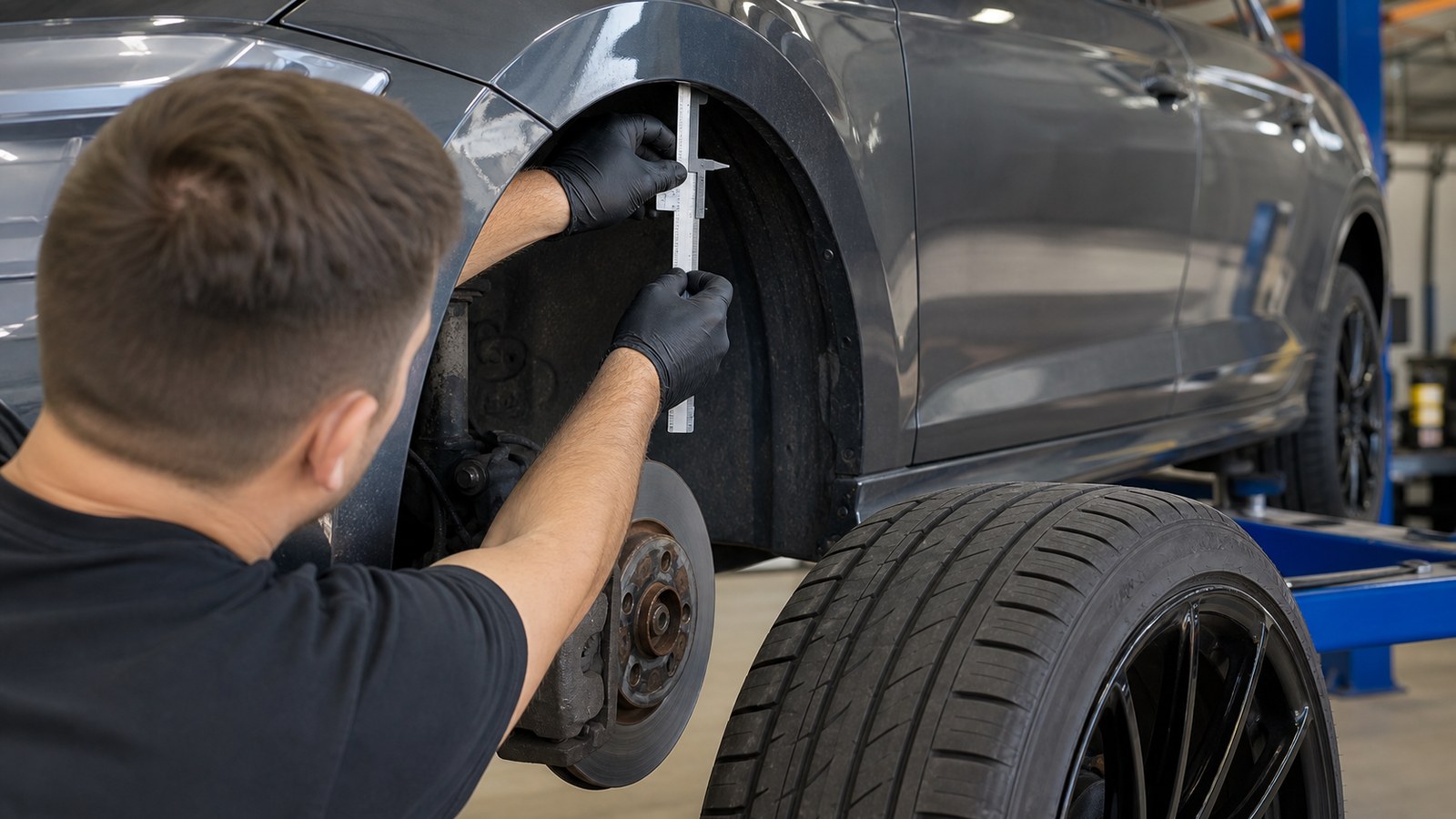
Wheel Offset And Tire Size Make Fitment Make Sense
Wheel offset, tire size, and fitment can sound confusing because several measurements interact at once. Diameter, width, aspect ratio, offset, backspacing, bolt pattern, center bore, brake clearance, load rating, rolling diameter, suspension travel, and fender clearance all matter. The goal is not just a good photo. The goal is a setup that steers, brakes, rides, clears, and wears correctly.
Fitment Is More Than Wheel Size
Wheel offset, tire size, and fitment work together as a geometry problem. A wheel can have the right diameter and still sit too far inward, poke past the fender, hit the brake caliper, rub the strut, or contact the fender liner. A tire can look perfect at rest and still rub when the suspension compresses or the steering reaches full lock.
Good fitment starts with the whole vehicle: wheel width, offset, bolt pattern, center bore, brake package, suspension travel, ride height, alignment, tire section width, load rating, and intended use. The goal is a setup that looks right while driving correctly.
Diameter Changes Tire And Ride Choices
Wheel diameter affects tire sidewall, brake clearance, appearance, weight, and ride comfort. A larger wheel can fill the wheel opening and clear bigger brakes, but it usually reduces sidewall height if the rolling diameter stays similar. Less sidewall can sharpen response, but it can also make potholes harsher and wheels easier to damage.
Smaller wheels can add sidewall, improve ride, reduce cost, and help winter or off-road setups. The best diameter depends on the car’s brakes, roads, tire options, and style. Bigger is not automatically better. The tire has to do real work after the photo is taken.
Width And Offset Decide Where The Wheel Sits
Wheel width describes how wide the wheel is. Offset describes where the mounting surface sits relative to the wheel centerline. Positive offset pulls the wheel inward, while lower offset usually pushes it outward. Backspacing describes a related measurement from the mounting surface to the inner edge. These numbers decide inner clearance and outer position.
Changing width without changing offset can move both edges of the wheel. A wider wheel may sit closer to the suspension inside and closer to the fender outside. That is why fitment calculators are useful only when paired with real measurements. The car’s exact brakes, suspension, and body matter.
Bolt Pattern And Center Bore Must Be Correct
Bolt pattern determines whether the wheel physically matches the hub studs or bolts. Center bore determines how the wheel centers on the hub. A wheel with the wrong bolt pattern should not be forced. A wheel with a larger center bore may need hub-centric rings depending on design. A wheel with too small a bore will not seat correctly.
Adapters and spacers can solve some fitment problems, but they add another layer of hardware. Quality, thickness, torque, stud engagement, hub support, and legal rules matter. Poor spacer use can create vibration, bearing stress, or unsafe mounting.
Rolling Diameter Affects The Vehicle’s Math
Rolling diameter is the overall height of the tire and wheel package. Changing it can affect speedometer accuracy, odometer readings, gearing, transmission behavior, ABS, stability control, driver assistance, and EV range calculations. A small change may be acceptable. A large change can create problems beyond the wheel well.
Trucks and off-road builds often increase diameter for clearance, while performance cars may keep diameter close to stock and adjust width or compound instead. The right choice depends on the vehicle’s systems and the owner’s tolerance for recalibration, rubbing, and gearing changes.
Tire Width Is Not The Same As Wheel Width
Tire sizing can be confusing because the printed width is nominal, not a perfect physical guarantee. Two tires with the same size label can measure differently depending on brand, model, sidewall design, tread width, and the wheel they are mounted on. This is why one 255 tire may clear while another rubs.
The tire also needs a wheel width within its approved range. Stretching or pinching tires can change sidewall behavior, bead security, ride, wear, and safety. Fitment should respect tire manufacturer guidance, vehicle load, and driving conditions.
Brake Clearance Has Several Dimensions
Brake clearance is not only diameter. Caliper shape, spoke design, barrel profile, wheel weights, and offset all matter. A wheel can be large enough and still hit the caliper face. Performance brake kits make this more important because calipers may be wider or shaped differently than factory parts.
Test fitting is often the safest answer when brake clearance is tight. Templates from brake manufacturers can help, but real wheels and real calipers are best. A spacer may solve spoke clearance while creating fender poke or stud issues, so the whole setup still needs review.
Suspension Travel Reveals Bad Fitment
A parked car does not show the full fitment story. The wheel moves upward, inward, outward, and through steering angles as the suspension works. Body roll, bumps, passengers, cargo, and braking all change clearances. A setup that clears on level ground may rub during driveway entrances, dips, or hard cornering.
Lowered cars need special attention because available travel is reduced. Lifted trucks need attention to control arms, fender liners, mud flaps, frame contact, and turning clearance. Fitment is dynamic. The vehicle needs to clear while moving, not only while posed.
Alignment Changes Clearance And Wear
Camber, caster, and toe affect both tire wear and clearance. More negative camber may tuck the top of the tire inward, but it can increase inside-edge wear when excessive. Toe settings can scrub tires quickly. Caster changes the wheel’s path while steering, which can matter on trucks with larger tires.
After changing wheels, tires, ride height, control arms, or suspension parts, alignment belongs in the plan. A setup that looks good but wears tires out in a few thousand miles is not finished. Fitment needs to be drivable and maintainable.
Load Rating And Speed Rating Are Safety Items
Tires and wheels need ratings that match the vehicle’s weight, speed, and use. A truck, EV, van, or SUV can be much heavier than a small car, and the wrong load rating can create heat and failure risk. EVs add torque and mass that can make tire choice especially important.
Speed rating matters too, but the right tire is not chosen by one rating alone. Load, temperature, tread life, weather, road noise, and grip all matter. A fitment setup is not safe just because it bolts on and clears.
Style Needs Practical Limits
Flush fitment, concave wheels, wide tires, stretched tires, tucked setups, and aggressive poke all have visual appeal in different scenes. The practical question is how the vehicle will be driven. Daily use, winter roads, highway trips, passengers, and inspections may punish extreme choices.
A clean fitment usually looks intentional without creating constant compromise. It clears suspension and brakes, avoids rubbing, preserves steering feel, and keeps tire wear reasonable. The best setups look good because they work.
Measure Before Buying
The safest fitment process is measurement before purchase. Note current wheel specs, tire size, clearances, brake package, ride height, and alignment. Compare inner and outer changes. Check owner examples for the same exact vehicle, but remember that trim, brakes, suspension, and tire model can change the answer.
Fitment mistakes are expensive because wheels and tires are hard to return after mounting. Measuring, test fitting, and choosing conservative specs can save money. Confusion fades when every dimension has a job.
Factory Specs Are The Starting Point
The original wheel and tire specifications tell owners what the vehicle was designed to use. Factory diameter, width, offset, tire size, load rating, and pressure give a baseline for steering feel, braking, ride, gearing, and electronic systems. Moving away from that baseline can work well, but every change needs a reason.
Trim level matters because brake packages and suspension setups can differ within the same model. A wheel that fits a base version may not clear a performance brake package. A tire that fits stock ride height may rub after lowering. Fitment research needs the exact vehicle, not only the badge.
Scrub Radius Affects Steering Feel
Offset changes can affect scrub radius, which is part of how the tire contact patch relates to the steering axis. Large changes may alter steering effort, kickback, tramlining, and stability. The driver may feel the vehicle follow grooves in the road or pull more under braking.
This is one reason extremely aggressive offset can have consequences beyond appearance. The wheel may look flush, but the steering geometry has changed. Good fitment respects the suspension design enough to preserve predictable road feel.
Unsprung Weight Changes Ride And Response
Wheels and tires are part of unsprung and rotating mass. Heavier setups can slow acceleration, lengthen braking, reduce ride quality, and make the suspension work harder over bumps. A large wheel with a heavy tire may look strong but feel sluggish compared with a lighter, well-matched setup.
Strength still matters. A light wheel that bends easily is a poor choice for rough roads. The ideal wheel balances weight, strength, brake clearance, cost, and appearance. Fitment is a performance decision even when the goal is style.
Off-Road And Winter Fitment Have Different Priorities
Off-road fitment often prioritizes tire diameter, sidewall height, load rating, puncture resistance, and clearance at full articulation. Winter fitment may use smaller wheels, narrower tires, and more sidewall for potholes, snow, and salt. Both setups still need brake clearance and correct load ratings.
The right seasonal or trail setup may look less dramatic than a flush street setup, but it can be safer and cheaper to maintain. Fitment should follow use, surface, and season rather than one universal style rule.
Test Fits Prevent Expensive Surprises
When fitment is close, test fitting is worth the effort. Mount one wheel, check brake clearance, turn the steering both ways, compress the suspension if possible, and inspect inner and outer gaps. Look for contact with struts, control arms, fender liners, brake hoses, and body seams.
After driving, inspect again. Fresh rub marks, tire smell, vibration, or pulled liners show that static clearance was not enough. A careful test fit protects tires, paint, suspension, and money.
Spacers And Adapters Need Quality Hardware
Spacers can move a wheel outward for brake clearance or stance, and adapters can change bolt pattern in some cases. Both add another mechanical interface, so quality matters. Hub-centric support, proper thickness, correct torque, clean mating surfaces, and enough thread engagement are essential.
Spacers also change geometry. Moving the wheel outward can increase bearing load, change scrub radius, and create fender clearance problems. They are tools, not shortcuts. If the wheel can be chosen correctly without them, that is often cleaner.
EVs Put Extra Demands On Tires
Electric vehicles often carry more weight and deliver immediate torque. That combination can increase tire wear and make load rating important. Large wheels may reduce range, while low-rolling-resistance tires may trade some grip for efficiency. EV fitment needs to balance appearance, range, noise, comfort, and durability.
Aerodynamic wheel designs can also support range at highway speed. A stylish open-spoke wheel may look better to some owners but create more drag. Fitment on EVs is not only about clearance; it can change how far the vehicle travels on a charge.
Aftermarket Wheels Should Be Inspected Over Time
A new wheel and tire setup should be checked after installation and again after real miles. Look for vibration, rubbing, loose weights, uneven wear, pressure loss, cracked wheels, bent lips, and damaged studs or bolts. Retorque procedures should follow the wheel and vehicle guidance.
Fitment problems often reveal themselves slowly. A small rub mark, feathered tread edge, or steering shake can be the first clue. Early inspection keeps a style choice from becoming a safety or repair problem.