The Hidden Foundation Beneath Every EV
Electric vehicle platforms are the structural and technological foundations that sit beneath modern electric cars, trucks, SUVs, vans, and future mobility vehicles. While most drivers notice the exterior design, dashboard screens, acceleration, range, and charging speed, the platform quietly determines much of what makes an EV feel modern. It influences where the battery sits, how the motors deliver power, how much interior space passengers enjoy, how safely the vehicle absorbs impacts, and how easily the automaker can build other models from the same foundation. In the simplest terms, an electric vehicle platform is the base architecture of an EV. It includes the chassis, battery pack, electric motors, suspension mounting points, power electronics, wiring systems, thermal management, and structural elements that support the vehicle body. Think of it as the skeleton, nervous system, and energy core of the vehicle all working together. Once you understand EV platforms, you start to see electric vehicles differently. They are not just gasoline cars with batteries added. The best ones are designed from the ground up around a completely different way of moving.
A: It is the foundation of an EV, including the battery, motors, structure, electronics, and key systems.
A: It affects range, safety, performance, charging, interior space, and production cost.
A: Usually yes, because it is designed specifically around electric power and battery placement.
A: It is a flat EV architecture with the battery under the floor and wheels near the corners.
A: Yes, because battery size, weight, aerodynamics, cooling, and efficiency all connect to platform design.
A: Yes, many automakers use shared platforms for multiple EV body styles.
A: They can be very safe when designed with reinforced battery protection and strong crash structures.
A: Yes, cooling helps batteries, motors, and electronics perform safely and efficiently.
A: Some systems can improve through software updates, though major hardware changes usually require new designs.
A: Yes, they are one of the main reasons future vehicles will be more flexible, digital, and electric-first.
Why EV Platforms Matter
Electric vehicle platforms matter because they shape nearly every major part of the driving experience. A well-designed EV platform can create more range, better handling, faster charging, safer crash performance, and roomier cabins. A weaker or outdated platform can limit battery size, reduce efficiency, complicate repairs, and make the vehicle feel less refined. In the electric era, the platform is one of the most important pieces of the entire vehicle.
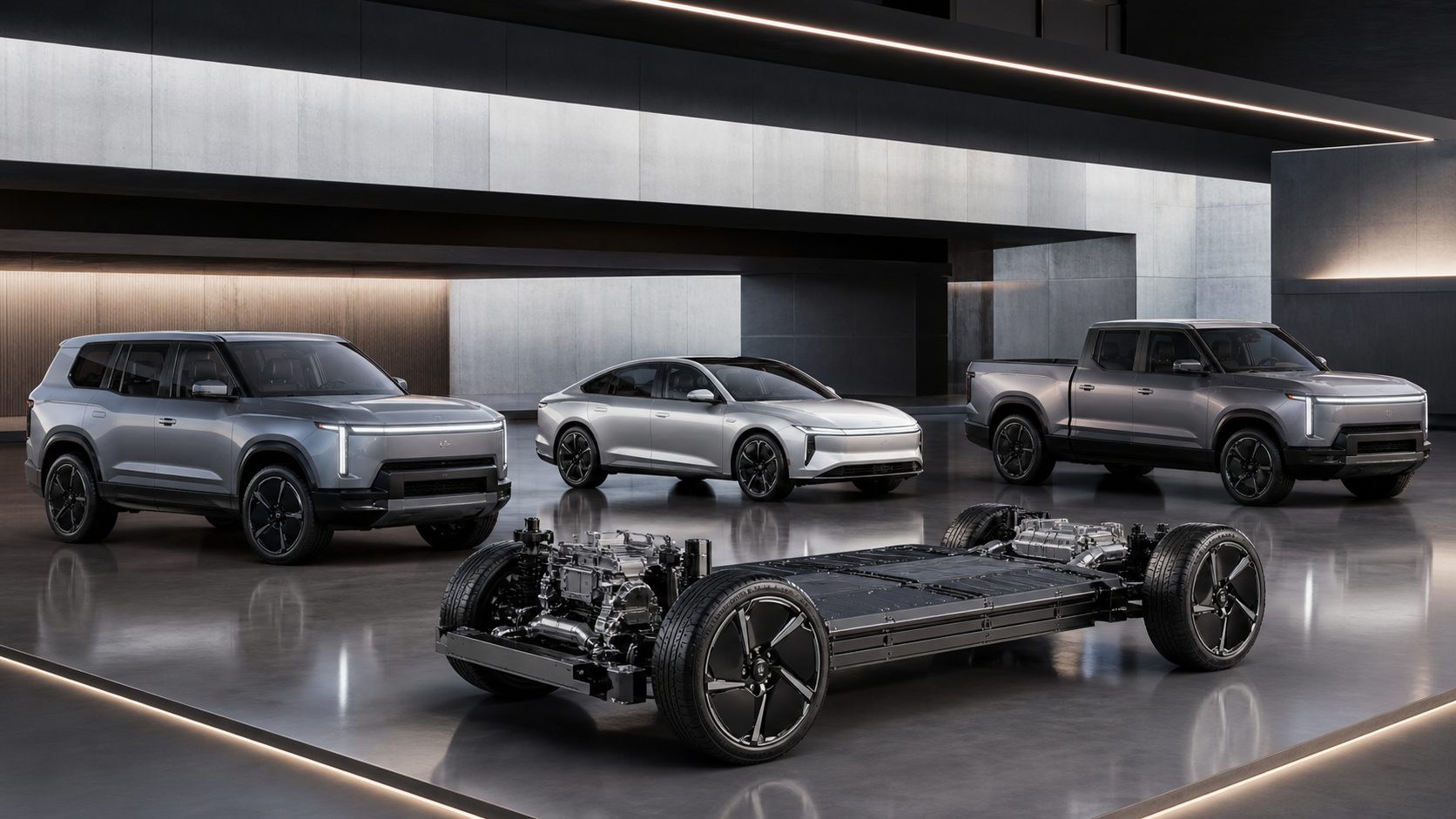
For automakers, EV platforms are also a business strategy. Instead of designing every electric model separately, companies can build multiple vehicles on one shared foundation. One platform might support a compact crossover, a midsize SUV, a performance sedan, and a delivery van. This reduces development cost, shortens production timelines, and helps brands launch more electric vehicles faster. That is why platforms are often discussed as the backbone of the EV revolution.
The Basic Parts of an Electric Vehicle Platform
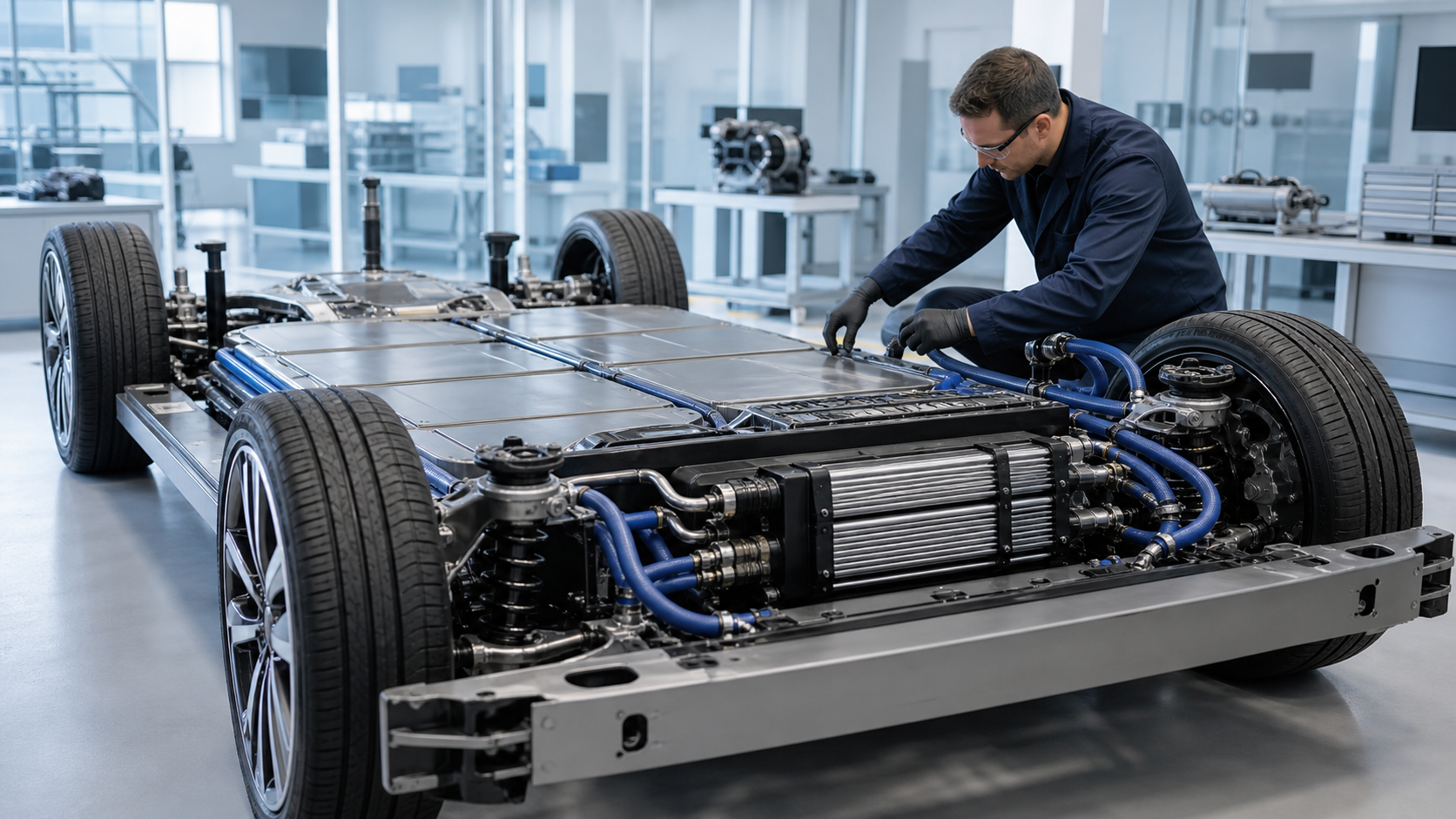
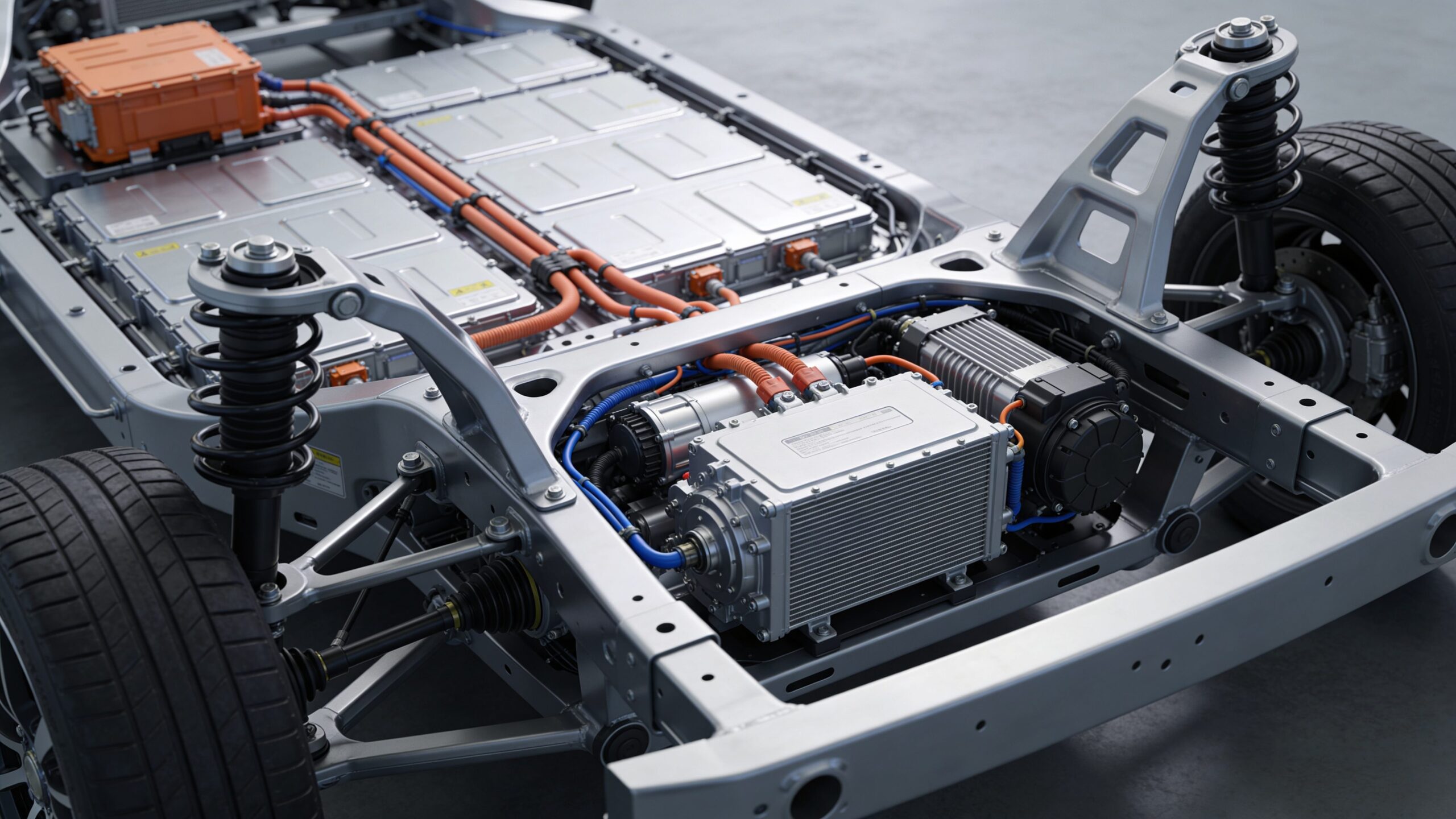
A modern EV platform usually includes several major components working together. The largest and most important is the battery pack, which stores the energy used to power the vehicle. In many EVs, this battery pack is placed low in the floor, stretching between the front and rear wheels. This placement improves stability, lowers the center of gravity, and frees up space above for passengers and cargo. The platform also includes one or more electric motors. These motors may be mounted at the front axle, rear axle, or both. A single-motor EV may use front-wheel drive or rear-wheel drive, while dual-motor EVs often provide all-wheel drive. Some high-performance EVs use three or four motors for more precise control. Around these core pieces are inverters, onboard chargers, cooling systems, suspension components, brakes, wiring, sensors, and software control units.
Dedicated EV Platforms vs Converted Platforms
Not all electric vehicles are built the same way. Some are built on dedicated EV platforms, meaning the architecture was designed specifically for battery-electric power from the beginning. These platforms usually place the battery under the floor and maximize the benefits of electric design. They often deliver better interior space, more efficient packaging, and stronger long-term flexibility.
Other EVs are built on converted platforms, which means they share architecture with gasoline or hybrid vehicles. These can still be good vehicles, but they may involve compromises. A platform originally designed for an engine, transmission, exhaust, and fuel tank may not offer ideal battery placement or space efficiency. As EV technology matures, dedicated electric platforms are becoming more common because they let engineers fully take advantage of electric propulsion.
The Skateboard Platform Explained
One of the most famous EV platform designs is the skateboard platform. It gets its name because the battery pack lies flat like a board, with the wheels pushed toward the corners. The motors, suspension, and electronics are integrated into this low, flat structure. A vehicle body can then be placed on top, much like a cabin mounted over a rolling electric foundation. The skateboard layout is popular because it is efficient, flexible, and scalable. It creates a low center of gravity, improves cabin space, and allows different body styles to share the same base. This is why many modern EVs, from crossovers to trucks, use some version of this concept. It is one of the clearest examples of how electric vehicles are changing traditional car design.
How Battery Placement Changes Everything
In gasoline vehicles, the engine is usually at the front, the fuel tank is typically toward the rear, and the transmission tunnel may run through the middle of the cabin. Electric vehicles change that layout completely. By placing the battery under the floor, engineers can distribute weight more evenly and create a flatter interior space.
This battery placement has major benefits. It helps the vehicle feel more stable in corners because the heaviest component sits low to the ground. It also improves packaging, allowing designers to create more open cabins, shorter hoods, and sometimes extra storage areas. In many EVs, the battery is not just an energy container. It is a structural part of the vehicle’s foundation.
Motors, Drivetrains, and Power Delivery
Electric vehicle platforms are designed around electric motors instead of internal combustion engines. Electric motors are smaller, simpler, and more flexible in placement. A motor can power the front wheels, rear wheels, or both. This makes it easier for automakers to create different performance versions from the same basic platform. Power delivery is one of the most exciting advantages of EV platforms. Electric motors provide instant torque, meaning acceleration can feel quick and smooth from a stop. Dual-motor platforms can adjust power between axles for better traction, while advanced systems can distribute torque with impressive precision. The platform determines how these systems are packaged and controlled.
How EV Platforms Affect Range
Range is one of the biggest questions for EV shoppers, and the platform plays a huge role in it. A platform that can hold a larger battery pack may offer more driving distance between charges. But range is not just about battery size. It also depends on weight, aerodynamics, motor efficiency, thermal management, and software.
A well-engineered platform balances all these factors. It keeps the battery protected and cooled, reduces wasted energy, supports efficient motor operation, and allows the vehicle body to be shaped for lower drag. This is why two EVs with similar battery sizes can have very different ranges. The platform underneath helps determine how effectively the vehicle uses its stored energy.
Charging Speed and Platform Design
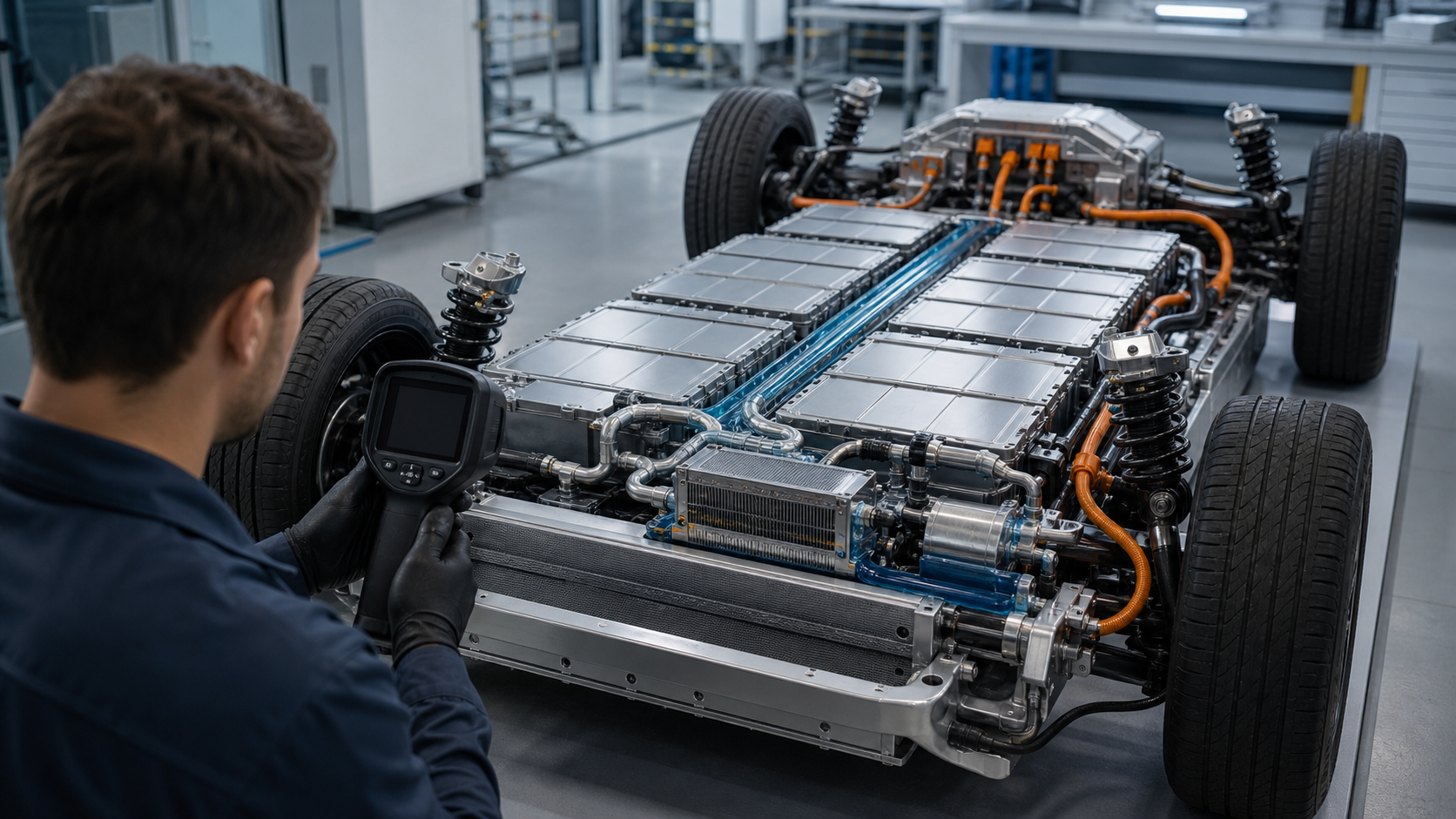
Charging speed is not only about the charger you plug into. The vehicle platform must be designed to accept and manage high-power charging safely. That means the battery chemistry, voltage architecture, cooling system, charging hardware, and software all need to work together. Some EV platforms use higher-voltage architectures to support faster charging and improved efficiency. Thermal management is especially important during fast charging. Batteries generate heat when charging quickly, and too much heat can reduce performance or battery life. A strong platform includes cooling systems that help maintain safe temperatures. This allows the vehicle to charge faster, more consistently, and more reliably.
Safety Benefits of EV Platforms
Electric vehicle platforms can offer important safety advantages. The battery pack is usually housed in a reinforced structure designed to protect it from impacts. Since many EVs do not have a large engine in front, engineers can design improved crumple zones that absorb crash energy more effectively. The low center of gravity can also reduce rollover risk compared with taller vehicles that carry weight higher up.
Safety also depends on electronic systems. Battery management software monitors temperature, voltage, and current to help prevent dangerous conditions. Crash sensors can disconnect high-voltage systems when needed. The best EV platforms combine physical strength with intelligent monitoring to protect both passengers and critical components.
Interior Space and Design Freedom
One of the most noticeable benefits of electric vehicle platforms is interior space. Without a traditional engine, transmission tunnel, and exhaust system, designers have more room to work with. Many EVs offer flat floors, open center areas, longer wheelbases, and clever storage spaces. Even compact EVs can feel surprisingly roomy because the platform uses space differently. This design freedom also changes the exterior. EVs can have shorter front overhangs, smoother shapes, and more aerodynamic profiles. Some include front trunks, while others use the extra space for larger cabins. The platform gives designers new freedom to rethink what a car should look and feel like.
Why Automakers Build Platform Families
Automakers rarely want to build just one electric vehicle. They want families of EVs that can serve many buyers. A shared platform makes that possible. By changing battery size, motor configuration, wheelbase, suspension tuning, and body style, a company can create several different models from one architecture.
This platform strategy reduces cost and speeds up development. It also makes manufacturing more efficient because factories can share parts, processes, and tooling. For consumers, this can eventually mean more choices and better prices. For automakers, it is one of the main ways to compete in the fast-moving EV market.
Software and the Modern EV Platform
Modern EV platforms are deeply connected to software. The platform is no longer just metal, wheels, and mechanical parts. It includes digital control systems that manage power delivery, charging, battery health, regenerative braking, driver assistance, climate control, and infotainment features. In many ways, an EV platform is as much a computing architecture as a vehicle architecture. Software also allows vehicles to improve over time. Over-the-air updates can adjust performance, add features, improve efficiency, or fix certain issues without a traditional service visit. This makes the platform a long-term technology foundation rather than a fixed mechanical design.
Thermal Management: The Unsung Hero
Thermal management is one of the most important hidden systems in an electric vehicle platform. Batteries, motors, and power electronics all perform best within specific temperature ranges. If components get too hot or too cold, range, charging speed, performance, and battery life can suffer.
A strong EV platform uses cooling loops, heat pumps, sensors, and software controls to manage temperature. In cold weather, the system may warm the battery before charging. In hot weather, it may cool the pack during fast driving or rapid charging. This behind-the-scenes engineering is critical to making EVs practical in real-world conditions.
Platform Materials and Structural Strength
EV platforms must be strong enough to protect the battery, support the vehicle body, and handle crash forces. They also need to be as light as possible because excess weight reduces efficiency. Automakers use materials such as high-strength steel, aluminum, composites, and advanced adhesives to balance strength and weight. The platform’s structure affects ride quality, handling, durability, and safety. A rigid platform can make the vehicle feel more solid and responsive. It can also reduce noise and vibration. Good platform engineering is something many drivers may not consciously notice, but they feel it every time the vehicle accelerates, turns, brakes, or rides over rough pavement.
EV Platforms and Manufacturing
Electric vehicle platforms are changing factories as much as they are changing cars. Since EVs have fewer moving drivetrain parts than gasoline vehicles, production can be streamlined. A shared platform allows automakers to build different models with common components and assembly methods. This can reduce complexity and improve consistency.
Manufacturing innovation also includes large castings, simplified wiring, modular battery assembly, and flexible production lines. The goal is to build EVs faster, cheaper, and with fewer parts. As the industry matures, platform design and factory design are becoming deeply connected.
Common Types of EV Platforms
Electric vehicle platforms vary depending on vehicle size and purpose. Small city EVs may use compact platforms designed for affordability and efficiency. Larger SUVs and trucks need platforms that support bigger batteries, stronger suspension systems, higher towing demands, and more powerful motors. Commercial EV platforms may prioritize durability, cargo space, and fleet maintenance. Performance EV platforms focus on power, cooling, stiffness, and high-speed stability. Luxury EV platforms may emphasize quietness, ride comfort, cabin space, and advanced electronics. The basic idea is similar across all of them: build a strong electric foundation that supports the vehicle’s mission.
Why Platforms Influence EV Pricing
EV pricing is heavily influenced by platform design. Battery packs are expensive, and platforms must be engineered to support them safely. Developing a new EV platform requires major investment in research, testing, software, manufacturing, and supply chains. That cost is one reason early EVs can be expensive.
Over time, shared platforms help reduce prices. When an automaker spreads platform development across many models, each vehicle carries less of the initial cost. Standardized parts and larger production volumes can also lower expenses. This is one reason EV platforms are so important to making electric vehicles more affordable.
The Future of Electric Vehicle Platforms
The next generation of EV platforms will likely be lighter, smarter, faster-charging, and more flexible. Solid-state batteries, improved battery chemistries, structural battery packs, wireless charging, and more advanced software systems could all reshape platform design. Future platforms may also be built with autonomous driving and connected mobility in mind from the beginning. As electric vehicles continue to evolve, platforms will become even more important. They will define not only how cars drive, but how they interact with energy grids, digital services, smart cities, and future transportation networks. The platform is where mobility innovation begins.
A Beginner’s Takeaway
Electric vehicle platforms are the foundation of the EV world. They determine how an electric vehicle stores energy, delivers power, protects passengers, uses space, charges, handles, and evolves over time. They are the reason modern EVs can look different, drive differently, and be manufactured differently from traditional cars.
For beginners, the easiest way to understand an EV platform is to think of it as the vehicle’s electric backbone. The body, cabin, technology, and design all build on top of it. As the auto industry moves deeper into the electric age, the companies with the best platforms will have a major advantage. The future of mobility is not just about batteries or motors. It is about the platform that brings everything together.