
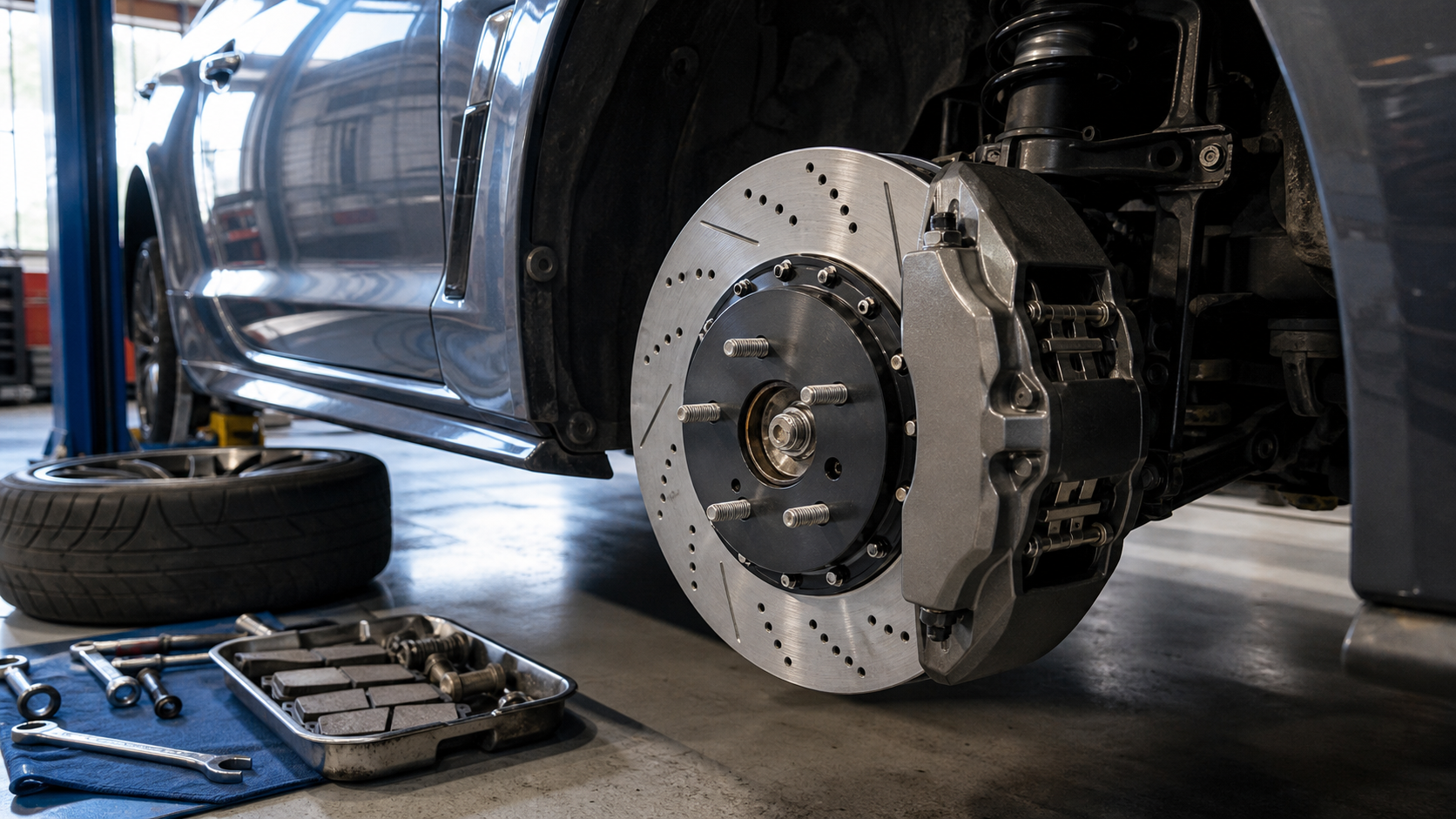
Brake Upgrades Should Match Heat, Tires, And Real Use
Top brake upgrades for high-performance street cars are the ones that improve repeatable stopping without making the car miserable or unsafe in daily driving. Pads, fluid, rotors, lines, cooling, calipers, and tires all matter. The right upgrade depends on weight, speed, tire grip, heat, driver habits, and whether the car sees commuting, mountain roads, autocross, track days, or towing.
Brake Upgrades Need A Clear Goal
Brake upgrades are easy to misunderstand because larger parts look impressive, but better braking depends on the whole system. Tires, pads, rotors, calipers, fluid, cooling, pedal feel, weight, suspension, and driver use all matter. A street car that never sees repeated high-speed stops may need different upgrades from a track-day car or a mountain-road build.
The right question is not simply how big the brakes are. It is what problem the upgrade is solving. Fade, weak bite, long pedal travel, vibration, heat cracking, uneven wear, and poor tire grip all point to different fixes. Clear diagnosis saves money and keeps the car balanced.
Tires Set The Real Stopping Limit
The brake system can only slow the wheels; the tires must grip the road. If the tires are old, hard, overheated, narrow, or poorly matched to the vehicle, bigger brakes may not shorten a single emergency stop. The anti-lock system may simply manage tire slip sooner. For many street cars, quality tires are the first braking upgrade.
This is especially important in rain, cold weather, and rough pavement. A high-performance pad cannot overcome poor contact with the road. Brake upgrades should begin with the tire and wheel package that actually supports the stopping force.
Pads Change Bite And Heat Range
Brake pads are often the most effective street performance upgrade. Pad compounds affect initial bite, fade resistance, dust, noise, rotor wear, cold response, and pedal feel. A track-focused pad may work poorly when cold and squeal during normal commuting. A comfort pad may feel smooth but fade under repeated hard use.
Street performance pads should match the car’s real use. A daily driver needs predictable cold stops, low noise, and safe wet behavior. A spirited weekend car can accept more dust or noise for stronger high-temperature performance. The compound must fit the duty cycle.
Fluid Protects Pedal Consistency
Brake fluid absorbs moisture over time and can boil when overheated. Boiling fluid creates a soft or sinking pedal during repeated hard braking, which is frightening and dangerous. Fresh high-quality fluid can improve consistency, especially for cars used in mountains, towing, autocross, or track events.
Fluid choice should match the system and maintenance plan. Some high-performance fluids need more frequent replacement. The upgrade only works if bleeding is done correctly and the owner keeps the fluid fresh. A neglected premium fluid can still become a problem.
Rotors Manage Heat And Surface
Rotors provide the friction surface and heat capacity for braking. Larger or heavier rotors can absorb more heat, while quality metallurgy and design affect durability. Slotted or drilled designs may help certain uses, but they can also add noise, wear, or cracking risk if chosen for appearance rather than need.
For many street cars, a high-quality plain or lightly slotted rotor with the right pad is better than an aggressive-looking rotor of unknown quality. Rotor selection should support heat management, pad compatibility, and long-term reliability.
Big Brake Kits Are Not Always Necessary
A big brake kit can add larger rotors, multi-piston calipers, better heat capacity, and improved pedal feel. It can be valuable for heavier cars, high-power builds, repeated hard use, or vehicles that overheat factory brakes. But it also adds cost, wheel clearance issues, replacement expense, and sometimes front-rear balance concerns.
A street car should not receive a big brake kit just for the look. The kit needs proper engineering, correct bias, compatible master cylinder behavior, wheel fitment, and service parts. A smaller, well-matched upgrade often works better than a flashy mismatched one.
Brake Cooling Matters Under Repeated Stops
Brake fade is usually a heat problem. Ducting, backing plates, airflow, wheel design, pad compound, and rotor mass all affect how well heat leaves the system. Cars used on track, long downhill roads, or heavy towing may need cooling more than larger calipers. Cooling helps the same hardware survive repeated work.
Street cars need practical cooling solutions that do not hang low, collect debris, or direct water badly. The best setup improves airflow without creating fragility. Heat control is often the difference between one good stop and many good stops.
Lines And Pedal Feel Need Careful Expectations
Stainless braided brake lines can reduce hose expansion and sharpen pedal feel when used correctly. They do not create more tire grip or magically increase brake torque. They are best viewed as a feel and durability upgrade, especially when old rubber hoses are tired. Installation quality is critical because brake line failure is serious.
Pedal feel also depends on pad compound, caliper stiffness, fluid, master cylinder sizing, booster behavior, and bleeding. If the pedal is soft because air remains in the system, a hardware upgrade will not fix the basic service issue.
Balance Is A Safety Issue
Changing only one part of the brake system can alter balance. Too much front bias can make the front tires work too hard, while too much rear bias can make the car unstable. Modern stability and anti-lock systems are calibrated around expected behavior. Serious changes need careful parts selection.
This is why proven kits and experienced installers matter. A balanced street brake upgrade feels predictable, stops repeatedly, and does not create strange behavior in emergency braking. Performance is useful only when control remains intact.
The Best Street Upgrade Is Usually System-Based
For most high-performance street cars, the best path is quality tires, fresh fluid, suitable pads, good rotors, healthy calipers, proper bleeding, and inspection of hoses and hardware. Bigger parts come later if heat or weight demands them. This order builds confidence without unnecessary complexity.
A brake upgrade is successful when the car stops predictably in the conditions it actually sees. Strong brakes are not about drama. They are about repeatable control.
Street Brakes Need Cold Confidence
A street car has to stop safely before the system is hot. Morning commutes, rain, parking lots, emergency stops, and winter driving all happen at ordinary temperatures. A brake setup that only feels strong after several hard stops may be wrong for daily use. Cold bite and predictable pedal response matter more than peak track behavior for most drivers.
This is where compound choice becomes important. A pad that works across a broad temperature range may be less dramatic on paper but better on the road. The driver should not need to warm the brakes to feel safe at the first intersection.
Wheel Fitment Can Limit Brake Choices
Larger calipers and rotors need space inside the wheel. Diameter, spoke shape, barrel clearance, offset, and wheel weights can all interfere. A big brake kit may require different wheels, spacers, or careful measurement. That can add cost and change steering feel, bearing load, or tire fitment.
Before buying hardware, owners should use fitment templates or measurements from the brake manufacturer. Clearance matters both when the car is still and when parts flex under load. A powerful brake package is useless if it does not fit safely.
Brake Noise And Dust Are Real Tradeoffs
Performance pads often create more dust, noise, smell, and rotor wear than comfort-focused pads. Some drivers accept that because they need the heat range. Others become frustrated when wheels turn black quickly or brakes squeal during city driving. The best upgrade matches tolerance as well as performance.
Noise does not always mean danger, but it should be understood. Pad compound, chamfers, shims, hardware, bedding, and rotor surface can all affect sound. Clean installation and proper bedding can reduce problems, but aggressive materials may still behave like aggressive materials.
Bedding Helps Pads And Rotors Work Together
Many brake pads need a proper bedding process so material transfers evenly to the rotor surface. Poor bedding can create vibration, uneven bite, glazing, or deposits that feel like warped rotors. The process varies by pad type, so following the part maker’s instructions matters.
After bedding, brakes should be allowed to cool without sitting stopped with the pedal clamped after a very hot stop. Good bedding is a small step that can make an upgrade feel smoother and last longer.
Inspection After Upgrades Is Essential
Brake upgrades should be inspected after installation and again after some driving. Leaks, rubbing lines, uneven pad wear, loose hardware, heat damage, rotor scoring, and wheel clearance issues need to be caught early. The system is too important to assume everything is fine after the first drive.
A careful owner checks pedal feel, fluid level, wheel torque, and visible hardware. A qualified shop can confirm the deeper details. The final measure of an upgrade is not the parts list. It is safe, repeatable braking in real use.
Brake Upgrades Should Match The Rest Of The Car
Brakes do not work alone. Suspension condition, tire grip, wheel weight, alignment, vehicle weight, and power level all affect how an upgrade feels. A car with worn shocks or poor alignment may dive, wander, or trigger stability control even with excellent pads and rotors. The supporting systems need to be healthy.
This is why a brake upgrade often begins with inspection. Tires, bearings, bushings, calipers, slides, hoses, and fluid condition should be known before new performance parts go on. Strong stopping power works best on a car that is already mechanically sound.
Street Legality And Insurance Still Matter
Most brake upgrades are straightforward, but owners should still consider inspection rules, warranty effects, and insurance questions. Removing parking brake function, changing hydraulic behavior badly, or installing uncertified parts can create trouble. A performance street car still has to be safe and legal for public roads.
Documenting parts and installation helps later service. The next shop needs to know which pads, rotors, lines, and calipers are installed. A good upgrade remains serviceable after the excitement of the install is over.
Brake Confidence Comes From Repeatability
The best street brake upgrade is the one that works the same way every time. The pedal should feel familiar, the car should stop straight, and the system should recover after heat. Sudden changes in bite, travel, smell, vibration, or noise deserve attention because braking depends on trust.
Repeatability matters more than a single impressive stop. A driver needs brakes that remain predictable in traffic, rain, hills, and emergency situations.
Maintenance Keeps Upgrades Working
Upgraded brakes still need routine care. Pads wear, rotors heat cycle, fluid ages, pins stick, and lines can rub if routed badly. Regular inspection keeps the investment useful and prevents a performance upgrade from becoming a neglected safety system.
Confidence Is The Upgrade
The real prize is confidence: a brake system that feels clear, holds up under repeated stops, and fits the way the car is actually driven.
Brake Upgrades Need Heat Capacity And Feel
Street performance brake upgrades should improve repeatable stopping, pedal confidence, and heat control without making the car unpleasant in daily use. Pads, fluid, rotors, lines, ducting, caliper condition, and tires all affect the result. Bigger parts are not automatically better if they add weight, noise, poor cold bite, or compatibility problems.
The right upgrade depends on the symptom. Fade after repeated stops points toward pads, fluid, cooling, or rotor heat capacity. A soft pedal may involve fluid, lines, or bleeding. Poor stopping distance may be more about tires than brakes. Good brake work begins with diagnosis rather than a catalog guess.


