Tire Upgrades Work Best When They Match The Car And Road
The best tire upgrades for street performance and grip are not simply the widest tires that fit. A good tire upgrade improves braking, steering, wet traction, heat control, and confidence without ruining ride quality or safety. The right choice depends on the car, climate, road surface, wheel size, driving style, and whether the vehicle is a daily driver, weekend car, EV, truck, or track-day build.
Tire Upgrades Define Street Performance
Tires are the only part of the car that touches the road, so they define how much braking, cornering, and acceleration the vehicle can actually use. Engine power, brake size, and suspension tuning all depend on tire grip. A strong tire upgrade can make a street car feel more responsive and safer without changing anything under the hood.
The best tire choice depends on climate, road quality, vehicle weight, driving style, noise tolerance, and budget. A tire that works perfectly for summer canyon driving may be wrong for cold rain, commuting, or long highway trips. Street performance needs usable grip, not only the highest dry number.
Compound Controls Grip And Wear
Tire compound affects traction, temperature range, tread life, wet behavior, and ride feel. Softer compounds often grip better in warm conditions but wear faster. Harder compounds may last longer and roll more efficiently but give up performance. The right balance depends on how often the car is driven hard.
Extreme-performance summer tires can be excellent in heat but poor in cold weather. All-season performance tires can be more useful for daily drivers in mixed climates. Tire category matters because the compound is built around expected use.
Tread Pattern Changes Wet Confidence
Tread pattern helps manage water, noise, heat, and block stability. A tire with wide channels may resist hydroplaning better, while a tire with large, stiff tread blocks may feel sharper in dry corners. Wet grip is especially important for street cars because public roads are unpredictable.
Drivers should not choose tires only by dry performance. Rain, standing water, cold mornings, and worn pavement are part of real street use. A tire that gives clear feedback in imperfect conditions is often the better upgrade.
Size Changes More Than Appearance
Wider tires can add grip, but only when the wheel, alignment, suspension, and vehicle weight support them. Too much width can increase tramlining, rubbing, rolling resistance, cost, and wet-weather risk. Larger wheels can sharpen response but reduce sidewall comfort and raise damage risk on potholes.
A well-sized tire uses the contact patch effectively. The goal is not the widest possible fitment. It is the size that gives grip, clearance, steering feel, and durability together.
Sidewall Behavior Affects Steering Feel
Sidewall stiffness changes how quickly the tire responds to steering input and how much it absorbs bumps. A stiff sidewall can feel precise but harsh. A softer sidewall can ride better but feel less immediate. Street performance needs enough response without making the car nervous or uncomfortable.
Wheel size, tire construction, pressure, and load rating all influence sidewall behavior. Drivers should consider the road surface they actually use. Broken pavement can punish overly aggressive tire and wheel combinations.
Temperature Range Is Critical
Every performance tire has a temperature window. A tire designed for warm weather may feel excellent in summer and unsafe near freezing. A tire designed for all-season use may not match the peak grip of a summer tire but can perform across more conditions. Choosing the wrong temperature range can be dangerous.
Storage matters too. Some summer tires should not be exposed to severe cold because the compound can be damaged. Owners need to understand the tire’s limits before using it year-round.
Tire Pressure Tunes The Contact Patch
Correct tire pressure affects grip, ride, wear, heat, and fuel economy. Too low can overheat the tire and wear shoulders. Too high can reduce grip and wear the center. Performance driving raises pressure as the tire warms, so the best cold setting may depend on use.
Street drivers should begin with the vehicle placard or a trusted performance setup, then watch wear patterns and feel. Guessing wildly can create problems. Pressure is a tuning tool, but it should be used carefully.
Alignment Unlocks The Upgrade
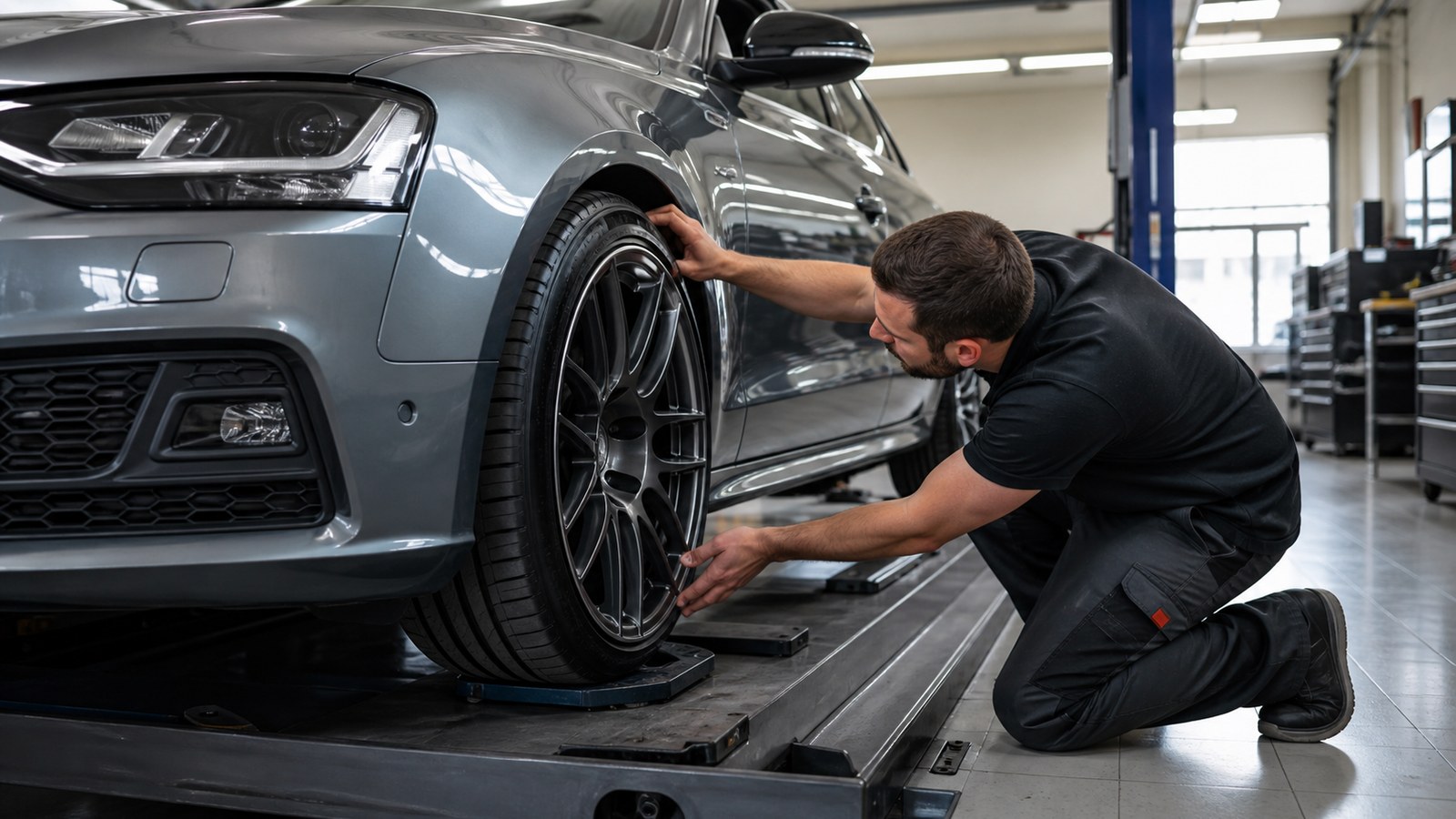
A tire upgrade can disappoint if alignment is wrong. Camber, toe, and caster affect how the tire meets the road during braking and cornering. Excessive toe can destroy tires quickly, while poor camber control can wear edges or reduce grip. Performance tires make alignment issues more obvious.
A street alignment should balance cornering, straight-line stability, tire life, and wet behavior. Track settings may not suit daily driving. The tire’s potential depends on geometry as much as compound.
Load Rating And Speed Rating Matter
Tires must match the vehicle’s weight, speed capability, and intended use. Load rating is especially important for heavier sedans, EVs, SUVs, and cars that carry passengers or cargo. Speed rating reflects heat and performance capability, but it should not be chosen without considering ride, cost, and availability.
Using a tire below the required rating can create safety and insurance issues. Performance upgrades should respect the engineering requirements of the vehicle. Grip is useless if the tire is not built for the load.
Break-In And Wear Change Performance
New tires may need a short break-in period as mold-release compounds wear away and the tread surface settles. Worn tires also change behavior as tread depth decreases. Dry response may feel sharper, but wet grip can fall significantly. A tire is not the same throughout its life.
Drivers should monitor tread depth, age, cracking, punctures, and uneven wear. A high-performance tire past its best condition can be worse than a less aggressive tire in good shape. Maintenance protects the upgrade.
The Best Tire Upgrade Fits The Whole Car
A tire should match suspension tuning, brake capability, wheel strength, climate, and driver expectations. A daily driver may need quiet wet confidence. A weekend car may prioritize dry steering feel. A heavier EV may need load capacity and low noise. Different vehicles ask different things from tires.
The strongest street tire upgrade makes the car easier to trust. It stops cleanly, turns predictably, rides acceptably, and works in the weather the owner actually sees. That is real grip.
Road Noise Matters On Daily Street Tires
Performance tires can add noise because of compound, tread block shape, and sidewall stiffness. Some drivers accept that for sharper response, while others find it tiring on long commutes. Noise can also grow as tires wear unevenly. A street tire should be judged after real highway miles, not only a short spirited drive.
Reading owner reports can help, but vehicle type matters. The same tire may sound different on a quiet luxury sedan, lightweight coupe, or heavy crossover. Cabin insulation and alignment both affect the final experience.
Wet Braking Is A Street Priority
Wet braking may matter more often than maximum dry cornering. Public roads collect water, oil, painted lines, leaves, and temperature changes. A tire with strong wet behavior gives the driver more margin when conditions are imperfect. That is why tread design and compound range matter so much.
A tire that performs well only on dry warm pavement may be wrong for many daily drivers. Street performance means confidence across the conditions the car actually sees.
EVs And Heavy Vehicles Need Special Attention
Electric vehicles and heavy performance cars can be hard on tires because of weight and instant torque. Load rating, wear rating, noise, rolling resistance, and sidewall support become important. A tire that works on a lighter car may wear quickly or feel vague on a heavier one.
Owners should choose tires built for the vehicle’s load and use. The best tire for a heavy EV may not be the same as the best tire for a lightweight sports car. Matching matters.
Rotation And Balance Protect The Investment
Performance tires are expensive, so rotation, balancing, alignment, and pressure checks matter. Uneven wear can ruin a tire long before the tread is gone. Vibration can point to balance problems, bent wheels, or tire damage. Maintenance keeps the upgrade performing as intended.
Directional and staggered setups may limit rotation options. Owners should understand those limits before buying. A setup that looks perfect may cost more over time if tire wear cannot be managed.
Grip Should Remain Predictable
The best street tires communicate clearly as they approach the limit. Sudden breakaway can be exciting on a track and unsettling on public roads. Predictable grip lets the driver make small corrections and stay within safe margins. Feel matters as much as peak traction.
A strong tire upgrade makes the car easier to place, easier to stop, and easier to trust. That is what street performance is really for.
Price Should Be Compared Over The Tire’s Life
A cheaper tire may cost more if it wears quickly, performs poorly in rain, creates noise, or reduces confidence. A more expensive tire may be a better value if it lasts longer and improves safety. Tire value should be judged over the life of the set, not only at checkout.
Drivers should include mounting, balancing, alignment, rotation limits, and seasonal storage when comparing costs. Performance tires are part of an ownership plan, not a one-time purchase.
Mixing Tires Can Create Problems
Mixing different tire models, tread depths, or categories can upset braking, steering, and all-wheel-drive behavior. The vehicle may react unpredictably in rain or emergency maneuvers. When possible, matching tires across an axle or all four corners is safer.
If only two tires are replaced, placement should follow professional guidance for the vehicle and conditions. Tire consistency supports stability. Grip imbalance can surprise even experienced drivers.
Street Performance Is About Usable Margin
The point of a tire upgrade is not to drive recklessly. It is to add margin for braking, turning, wet roads, evasive maneuvers, and confident control. A better tire makes normal driving safer and spirited driving more predictable when used responsibly.
That margin is why tires are such a powerful upgrade. They improve every system that depends on road contact, from brakes to suspension to steering.
Storage Protects Seasonal Tires
Drivers who use separate summer and winter tires should store the off-season set correctly. Clean, dry, cool storage away from sunlight and chemicals helps protect rubber. Tires mounted on wheels can be stored differently from unmounted tires, but both need care.
Seasonal storage also creates a natural inspection point. Before reinstalling tires, check tread depth, age, punctures, cracking, and uneven wear. A performance tire should return to service only when it is still safe.
Good Tires Make Other Upgrades Work
Brakes, suspension, steering, and power upgrades all depend on tire contact. Better tires let the rest of the car show its strengths. Weak tires hide good hardware and reduce confidence.
When the tire matches the vehicle, climate, and driver, every other performance system has a stronger foundation to work from.
Street Performance Tires Need Balance
A tire upgrade can transform grip, steering, braking, and confidence, but the best street tire is not always the most aggressive one. Daily use may involve rain, cold mornings, potholes, long highway drives, noise limits, and tread-life expectations. The right tire matches the car’s power and the driver’s actual roads.
Wheel width, alignment, pressure, suspension travel, and clearance all affect how the tire performs. A sticky tire on a poor setup can wear quickly or feel nervous. A balanced upgrade gives the car more grip without making it unpleasant or expensive to drive every week.