The Best Efficiency Mods Reduce Waste First
Top car mods that improve fuel efficiency and performance are usually the ones that reduce wasted energy while preserving drivability. Proper tires, alignment, correct oil, maintenance, light wheels, sensible aero cleanup, brake repair, and data monitoring can help a car feel better and use less energy. The worst approach is adding parts that look fast while increasing drag, weight, heat, or emissions problems.
Efficiency And Performance Can Work Together
Car modifications are often framed as a choice between speed and efficiency, but the best upgrades can improve both when they reduce waste. Tires, alignment, weight, cooling, airflow, engine calibration, and maintenance all affect how much energy the car needs to move. A sharper car is not always a thirstier car.
The key is to target losses before chasing peak numbers. A car with dragging brakes, poor alignment, old fluids, heavy wheels, and bad tires wastes energy no matter how good the engine is. Efficiency begins with the whole vehicle working cleanly.
Tires Change Grip And Energy Use
Tires are one of the most important choices because they affect rolling resistance, traction, braking, ride, noise, and weight. A low-rolling-resistance tire may improve fuel economy but reduce performance feel. A sticky performance tire may improve grip but wear faster and use more energy. The right tire balances the owner’s priorities.
For many street cars, a quality performance all-season or touring tire is the sweet spot. It can improve steering and wet grip without the cost or cold-weather limits of extreme summer rubber. Tire pressure and alignment are just as important as the model chosen.
Alignment Can Add Efficiency And Control
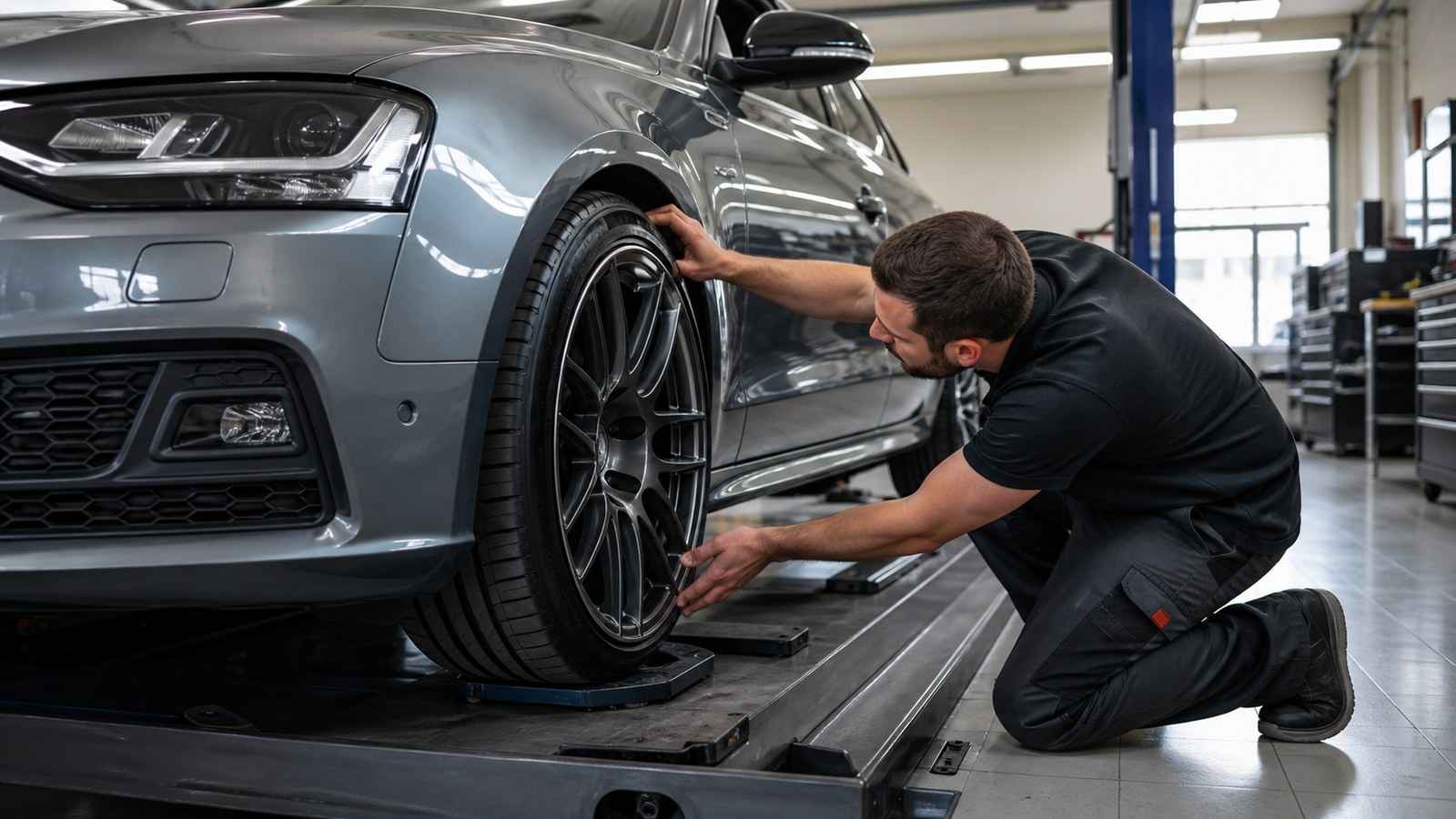
A good alignment helps the car roll straight and keeps tires working evenly. Excessive toe can create drag and wear tires quickly. Poor camber can reduce contact patch in ordinary driving. Correct alignment improves steering feel, tire life, and efficiency at the same time.
Performance alignment should fit the road use. Aggressive track settings may reduce tire life and increase drag during commuting. A street-focused setup gives cleaner response without making the car nervous or costly to maintain.
Lightweight Wheels Can Help
Reducing unsprung and rotating weight can improve ride, steering, acceleration, and braking. Lightweight wheels can make a car feel more responsive without adding engine power. The benefit is strongest when the wheels are also strong, correctly sized, and matched to suitable tires.
Weight should not be the only concern. A weak wheel can bend on rough roads, and a large wheel may require expensive tires. The best wheel upgrade supports both performance and daily durability.
Aerodynamics Matter At Highway Speeds
At higher speeds, aerodynamic drag becomes a major energy demand. Removing unused roof racks, repairing undertrays, adding well-designed splitters or spoilers where appropriate, and keeping body panels aligned can all influence efficiency and stability. Random aero parts may add drag or imbalance if chosen only for style.
Street aero should be subtle and functional. A smooth underbody, clean airflow, and reduced lift can help without making the car impractical. The goal is stability and lower waste, not decoration.
Engine Tuning Needs A Balanced Map
A tune can improve throttle response, torque delivery, boost control, and sometimes fuel economy, but only when it is calibrated responsibly. Overly aggressive timing, boost, or fueling can create heat, knock risk, emissions problems, and drivetrain stress. A good street tune improves drivability across normal conditions.
Efficiency can improve when the engine operates more smoothly and avoids unnecessary enrichment or gear hunting. The tune must match fuel quality, hardware, climate, and maintenance condition. Calibration is where performance and restraint meet.
Intake And Exhaust Mods Need Testing
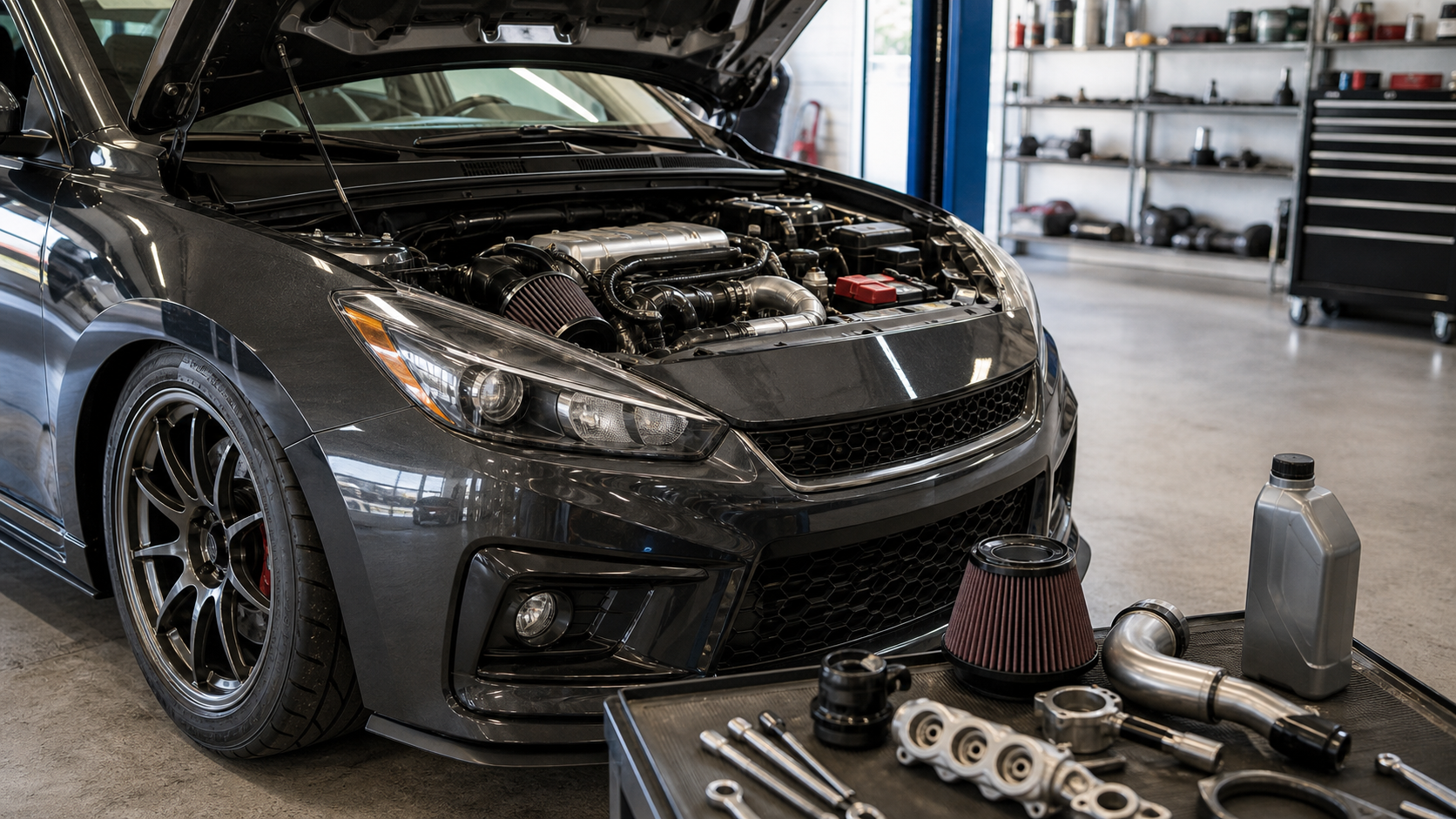
Intake and exhaust changes can reduce restriction, improve sound, and support other upgrades. They can also add heat, noise, drone, or check-engine lights if poorly designed. A hot-air intake may look impressive while reducing power in summer traffic. A loud exhaust may feel fast while adding little performance.
The best systems are tested, sealed, legal, and matched to the engine’s needs. Sound can be part of enjoyment, but it should not be mistaken for efficiency or power by itself.
Cooling Keeps Performance Repeatable
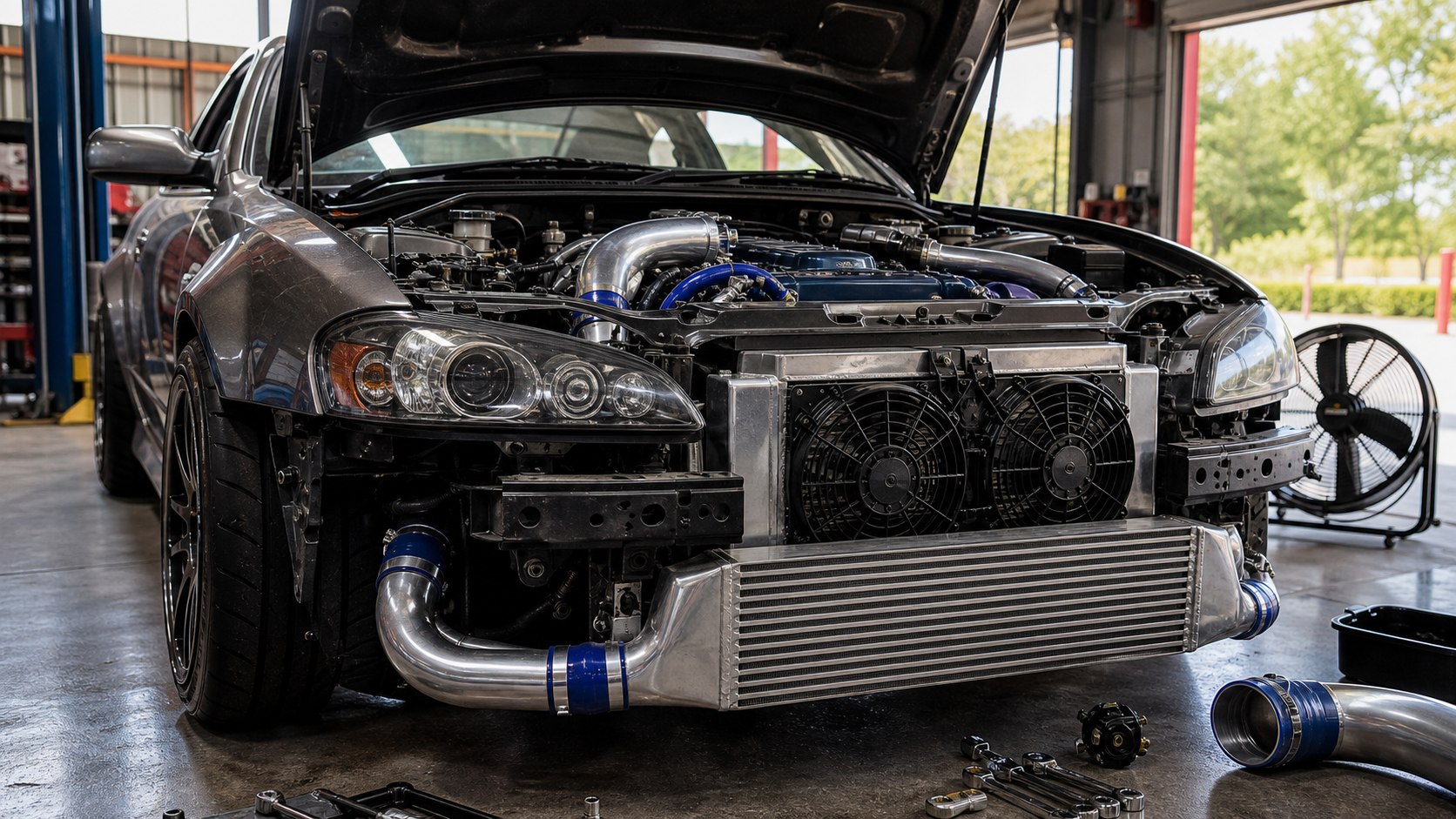
Heat reduces power and can damage components. Better radiators, intercoolers, oil coolers, ducting, and fresh fluids can make performance more consistent. Cooling upgrades may not always show a big peak-power gain, but they help the car maintain output under stress.
Efficiency also benefits from stable temperatures. Engines and transmissions work best within intended ranges. A car that constantly fights heat wastes energy and wears parts faster.
Weight Reduction Should Stay Practical
Removing unnecessary weight improves acceleration, braking, handling, and efficiency. Clearing unused cargo, choosing lighter wheels, and avoiding heavy cosmetic parts can help. Extreme weight reduction, however, can remove comfort, safety, sound control, or everyday usefulness.
A daily street car needs a practical balance. Lightweight parts are best when they preserve reliability and function. The goal is to remove waste, not make the vehicle unpleasant.
Maintenance Is An Upgrade
Fresh spark plugs, clean filters, correct fluids, healthy sensors, free-moving brakes, and proper tire pressure often improve performance and fuel economy more than flashy parts. A car cannot perform efficiently when basic systems are tired. Maintenance restores the platform that modifications build on.
This is especially true for older vehicles. Before buying power parts, owners should make sure the engine, cooling system, suspension, brakes, and driveline are healthy. Baseline condition decides how well upgrades work.
Driving Style Completes The Result
No modification can overcome wasteful driving. Smooth acceleration, steady speed, early braking, proper gear choice, and reduced idle time can improve efficiency while keeping the car enjoyable. A well-modified car encourages control rather than constant aggression.
Performance and efficiency meet when the vehicle responds cleanly to small inputs. The driver uses less energy because the car is balanced, maintained, and predictable. That is better than chasing one large number.
Gearing Can Change How Efficient A Car Feels
Final-drive ratios, transmission programming, tire diameter, and shift strategy all affect fuel use and acceleration. Shorter gearing can make a car feel lively but raise highway rpm. Taller gearing can reduce cruising effort but make the car feel lazy if the engine lacks torque. The right setup depends on how the car is driven most often.
Modern automatic and dual-clutch transmissions complicate this because software decides when to shift. A good tune can reduce gear hunting and improve drivability. A poor tune can make the car busy, hot, or inefficient. Gearing is part of the whole energy picture.
Brake And Bearing Drag Are Hidden Losses
A car can waste energy through parts that barely announce themselves. Sticking calipers, old wheel bearings, poor wheel fitment, and dragging parking brakes can add resistance. The driver may notice heat, smell, noise, vibration, or a gradual drop in mileage. Sometimes the car simply feels less eager.
Checking for drag is a practical step before adding power. A vehicle that rolls freely accelerates, coasts, and brakes more predictably. Removing hidden losses can make the car feel stronger without increasing engine output.
Airflow Under The Car Matters
Undertrays, splash shields, wheel-well liners, air dams, and small seals often look minor, but they can guide air and protect efficiency. Missing panels can increase drag, reduce cooling effectiveness, or expose components to debris. Many cars are designed with these pieces as part of the airflow path.
Owners sometimes remove damaged panels and never replace them. For a car that spends time at highway speed, restoring those pieces can be a real efficiency repair. Aerodynamics are not only for race cars.
Battery And Charging Health Affect Modern Cars
Weak 12-volt batteries, poor grounds, and charging-system issues can create inefficient behavior in modern vehicles. Modules may behave strangely, stop-start systems may disable themselves, and sensors may report inconsistent data. Electrical health supports both reliability and efficiency.
Testing the battery and charging system is simple compared with chasing odd symptoms. A vehicle cannot manage fuel, spark, transmission behavior, or hybrid systems well if basic voltage is unstable.
Efficiency Mods Should Keep Safety First
Some drivers chase fuel economy with unsafe tire pressures, extreme drafting, removed safety equipment, or poor visibility choices. Those are not good modifications. A useful efficiency upgrade should preserve braking, handling, lighting, legality, and comfort. Saving fuel is not worth adding risk.
The best improvements make the car easier to drive well. They reduce waste while keeping the vehicle predictable. Efficiency should feel calm, not fragile.
Software Can Improve Drivability
Modern vehicles rely on software for throttle response, transmission behavior, boost control, hybrid blending, cooling fans, and fuel strategy. A well-developed calibration can make the car feel smoother and more efficient in normal driving while preserving performance when requested. Poor software can do the opposite.
Owners should choose tuners who understand the full vehicle, not only peak power. Street calibration needs clean starts, stable idle, safe temperatures, emissions readiness where required, and predictable part-throttle behavior. That is where efficiency and performance meet most often.
Fuel Economy Claims Need Testing
Modification claims should be tested against real routes and repeatable conditions. A short drive after installing a part does not prove much. Weather, traffic, tire pressure, fuel blend, and driver excitement can all change the result. The best comparison uses several tanks or logged trips.
Honest testing prevents disappointment. Some parts improve sound or feel without improving efficiency. That may still be worthwhile, but owners should know what benefit they actually received.
Small Details Add Up
No single small change may transform a car, but several sensible changes can add up. Correct pressure, good alignment, lighter wheels, clean filters, healthy brakes, restored undertrays, and smooth driving all reduce waste. Together, they can make a car feel more responsive and cost less to run.
This is the best kind of practical tuning: the vehicle becomes sharper because less energy is being lost. Efficiency is often hidden performance.
Emissions Readiness Should Stay Intact
Efficiency-performance builds should preserve emissions readiness where inspections apply. A car with disabled monitors, illegal deletes, or constant check-engine lights may become difficult to register and harder to sell. A truly practical modification keeps the car legal as well as enjoyable.
This matters even for enthusiasts who care mainly about performance. A vehicle that passes inspection, runs cleanly, and remains easy to diagnose is more useful. Good tuning works with the control system rather than fighting it.
Comfort Can Support Efficiency
Comfortable cars are easier to drive smoothly. If a car drones, vibrates, overheats, or feels nervous, the driver may use more throttle and brake more abruptly. A balanced setup can make efficient driving feel natural instead of forced.
The best upgrades improve the car’s usable range: smoother commuting, cleaner highway travel, stronger response, and fewer wasted motions from the same basic machine.
The Practical Goal Is Less Waste
Every useful efficiency-performance change should reduce waste somewhere: wasted grip, wasted heat, wasted drag, wasted fuel, or wasted motion. When those losses fall, the car feels better without becoming harder to live with.
Efficiency Mods Work Best With Maintenance
Fuel-efficiency modifications are most effective when the vehicle is already healthy. Correct tire pressure, clean filters, good spark plugs, proper alignment, fresh fluids, working oxygen sensors, and brakes that do not drag can restore lost efficiency before any aftermarket part is installed. Maintenance often gives the cheapest improvement.
Aerodynamic pieces, lighter wheels, low-rolling-resistance tires, tuning, and intake or exhaust changes need careful evaluation. Some parts promise gains but create noise, cost, or drivability tradeoffs. The most useful efficiency upgrades reduce wasted energy without making the vehicle less pleasant to drive.